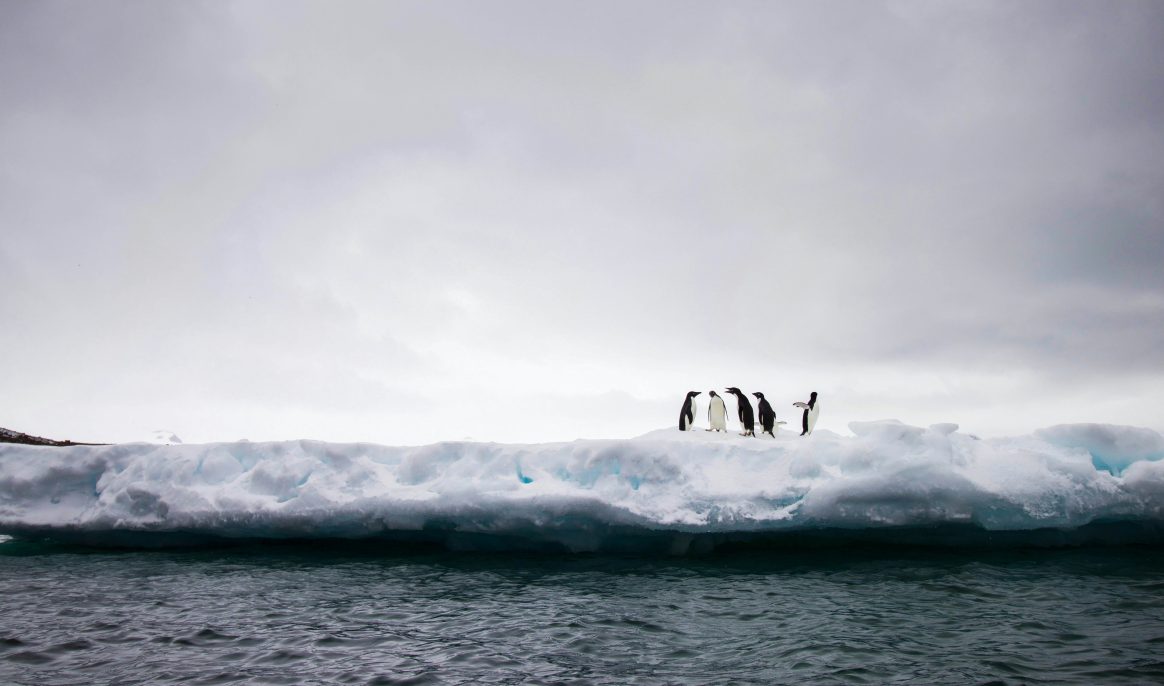
©Dylan Shaw via Unsplash - photo d'illustration
-
Jul 13, 2026 14:11
Emperor penguins have officially been classified as an endangered species, a fate also shared by Antarctic fur seals. The updated IUCN Red List paints a picture of an increasingly fragile situation within the Antarctic ecosystem, where the decline in sea ice is disrupting the survival conditions of many species.
Scientists explain that emperor penguins depend on stable ice for most of the year. They need it to mate, incubate their eggs, raise their chicks, and complete their molting. When the ice breaks up too early, the chicks—which are not yet able to swim—fall into the water or freeze to death. Satellite imagery reveals a decline of about 10% in the population between 2009 and 2018, representing more than 20,000 adults.
Since 2016, sea ice extent has reached record lows, and climate models indicate that the population could be halved by the 2080s if emissions are not significantly reduced. Some colonies are already showing alarming signs, with sharp declines in numbers and breeding sites that have collapsed before the young could survive.
The impact on Antarctic sea lions and southern elephant seals
The problem isn’t limited to penguins. Antarctic fur seals have also been classified as “endangered” following a decline of more than 50% in their population, which has fallen from over two million individuals to less than one million in about twenty years. The main cause is the depletion of krill—their primary food source—which is migrating to deeper waters due to rising temperatures.
The krill shortage has a direct impact, particularly on pups, whose survival rate during their first year of life has plummeted in several colonies. This results in an aging population and a decline in the breeding population. To make matters worse, natural predators such as orcas and leopard seals are exacerbating this vulnerability, as is competition with whales—whose populations are rebounding—which feed on the same prey.
At the same time, southern elephant seals are also showing signs of distress. The species has been classified as “vulnerable” following widespread mortality linked to highly pathogenic avian influenza. In some colonies, more than 90% of the calves have died, while adult females are particularly vulnerable due to the extended time they spend on the beaches.
Antarctica: A wake-up call for the entire planet
These species are valuable indicators of environmental change. Animals that live in dense colonies, such as penguins and seals, are particularly vulnerable to disease and habitat loss. Furthermore, rising temperatures facilitate the spread of pathogens in polar regions, where animals have had little exposure to them until now.
The update to the Red List sends a clear message: the decline of these populations is not an isolated phenomenon; it reflects an increasingly unstable Antarctic ecosystem. Scientists are calling for more extensive monitoring programs and swift action, as the data show that the time we have to reverse this trend is rapidly running out.
Source: IUCN / World Wildlife Fund
Share: