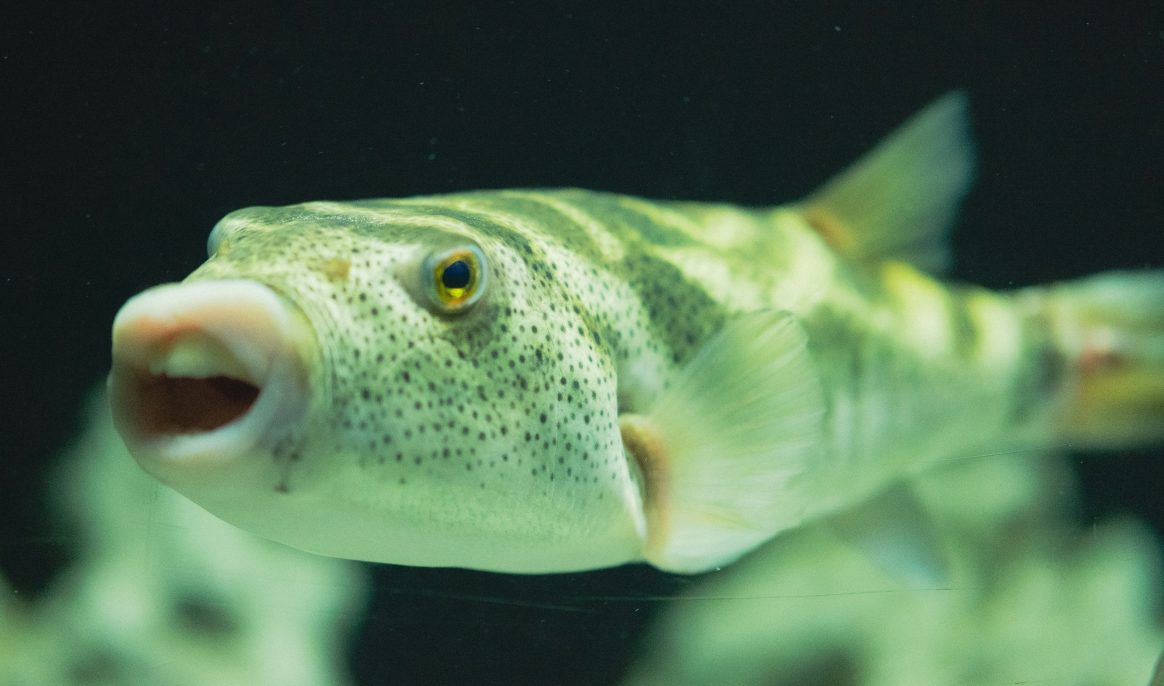
©Angel Maldonado via Unsplash
-
Jul 11, 2026 15:25
The pufferfish is invading the Mediterranean: Greece is on alert due to bites that are deadly to wildlife and cause serious injuries to swimmers. After the blue crab, a new threat is terrorizing our seas.
A new, insidious shadow is looming over the ecological balance of the Mediterranean basin. This is not a single predator, but a true lineage of underwater colonizers belonging to the Tetraodontidae family, commonly known as “pufferfish”. The invasive alien species, which reached the Mediterranean basin via the Suez Canal from the warm waters of the Red Sea, is multiplying at a rapid pace.
After establishing stable colonies along the coasts of Israel and Cyprus, the invader has taken Greece and the island of Crete by storm. It now poses the threat of an imminent and massive expansion toward the Italian coast, repeating the same destructive biological scenario already observed with the arrival of the blue crab.
Steel-like jaws ravaging nets and local wildlife
The impact of the tropical migrant on local ecosystems is proving devastating. Greek fishermen are in a state of deep distress: when they set their nets, they are increasingly finding fish that are already dead and mutilated.
Pufferfish are, in fact, equipped with exceptionally robust jaws and sharp teeth. The bony structure is so powerful that it allows them to crush wood and metal with ease. The lacerations caused by their bites prove fatal to most of the local marine fauna, compromising biodiversity and leaving behind a trail of economic damage that is considerable for the commercial fishing sector.
The danger to swimmers and the Greek Red Cross’s practical guide
The threat has now extended beyond the realm of marine biology and directly affects public safety. Recently, a shark attacked an elderly swimmer in Varkiza, in the Attica region. The victim had to be rushed to the hospital for several stitches.
In response to this escalation, the Greek Red Cross issued an official alert and published a first-aid guide. In the event of a bite, the main risk is severe bleeding: the guidelines recommend immediately washing the wound with fresh water, stopping the bleeding by applying firm pressure with sterile compresses, and, if necessary, receiving a tetanus shot. In Greek waters, the species Lagocephalus sceleratus and Torquigener flavimaculosus have already been identified.
The consumption ban and the monitoring plan along the Italian coast
This animal’s most formidable weapon, however, remains invisible. Its flesh contains tetrodotoxin, a powerful neurotoxin that attacks the human nervous system, making the ingestion of any part of the fish potentially fatal. For this reason, the sale and consumption of this fish for food are strictly prohibited internationally, although the scientific community is currently conducting studies to try to neutralize the venom for commercial or industrial purposes.
Share: