© Mark Vihtelic via Unsplash
-
Jun 03, 2026 11:30
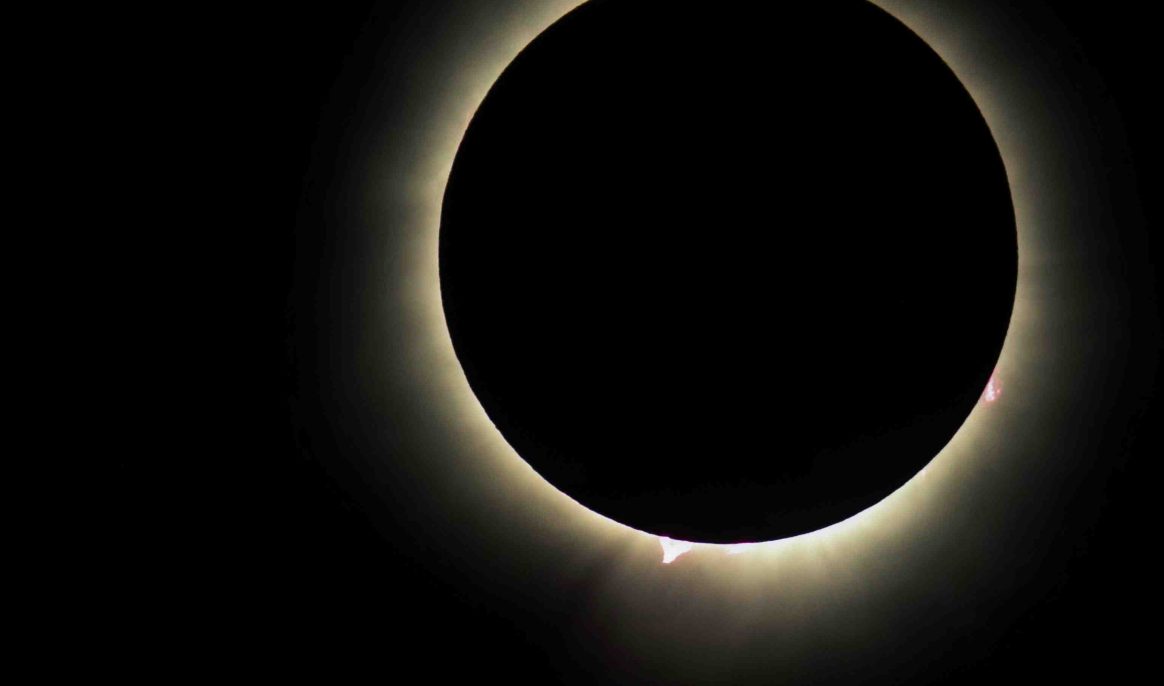
On August 12, 2026, the skies over Europe will host an exceptional astronomical spectacle: a total solar eclipse, the first visible in Europe for over twenty-five years. This phenomenon has not been seen since the eclipse of August 11, 1999, while the next total solar eclipse visible at our latitudes will not occur until 2081. For many observers, this could be the astronomical event of a lifetime, especially as the Sun will be very low on the horizon, creating a unique twilight atmosphere.
The eclipse on August 12 will take place in the late afternoon and early evening, between 7.22 and 9pm depending on location, with totality lasting between one and two minutes in Europe. The maximum duration of totality will be 2 minutes 18 seconds in the North Atlantic, near Iceland. What makes this phenomenon particularly singular is that it occurs at sunset, so observers need a clear western horizon to take full advantage of the show.
The band of totality will mainly cross northern Spain, from Bilbao to Tarragona via Zaragoza, as well as western Iceland, including the area around Reykjavik. A tiny part of northeast Portugal will also be affected. In these regions, the sun will be entirely occulted for almost two minutes, plunging the landscape into a strange twilight darkness that is ideal for observing the solar corona, the plasma envelope that surrounds the Sun and is usually invisible to the naked eye.
For the whole of France, the eclipse will be partial but extremely marked, with an occultation rate of at least 80% across the country, and often much more. In the Pyrenees and Basque country, occultation will reach up to 99.7%, which is almost equivalent to a total eclipse. Biarritz and Saint-Jean-de-Luz will see 99.5% of the Sun covered, creating an almost crepuscular luminosity. Bordeaux will see 97.6% occultation, Toulouse 97.9%, while Brittany, with Lorient at 96%, will also experience an impressive phenomenon. Even Paris will see 92% of the Sun hidden, and Lyon 93.9%. Montpellier reaches 96.4%. This near-totality will make the eclipse spectacular all over France, transforming daylight into the strange, metallic hue typical of major eclipses.
Belgium, including Brussels and Liège, will also see a significant partial eclipse, with a high occultation rate that will provide Belgian observers with a remarkable astronomical experience. The western horizon will need to be clear to enjoy the phenomenon, as the Sun will be very low at the moment of totality.
Astronomy clubs, planetariums and scientific associations will be organizing numerous observing events in major French and European cities, particularly in the south and west of France where darkness is highest. The Basque country and the Atlantic coast are expected to attract exceptional crowds, both locals and visitors from elsewhere, notably Spain, where the band of totality will cross the north of the country. Spain will become the focal point for astronomical events linked to this eclipse, with gatherings organized from Bilbao to Tarragona.
Strict precautions must be taken to observe the eclipse. It is essential to wear solar eclipse-approved glasses, and never to observe the sun directly without suitable protection, even when 99% of the solar disk is hidden. Normal glasses, photographic films, DVDs or CDs do not protect the eyes and can cause serious, irreversible eye damage. Only certified solar observing equipment offers sufficient protection against the Sun's harmful rays.
Beyond the astronomical aspect, this eclipse offers a unique opportunity to observe the reactions of living beings to this sudden drop in luminosity. Birds may stop singing, insects may become as active as at dusk, and some animals may display unusual behaviors in the face of this unexpected daytime darkness. These natural phenomena make the eclipse a fascinating subject of study for naturalists and animal behavior enthusiasts, in addition to its purely astronomical dimension.
Share: