© Planet Volumes via Unsplash
-
Jun 16, 2026 19:30
The closure of the Strait of Hormuz and the crippling of Gulf gas fields have laid bare just how fragile the planet's dependence on strategic chokepoints truly is. Now, researchers are daring to look further — much further — for answers, turning their gaze to Titan, Saturn's hydrocarbon-drenched moon. It may be an ambitious dream, but it is one that rewrites the very concept of energy transition.
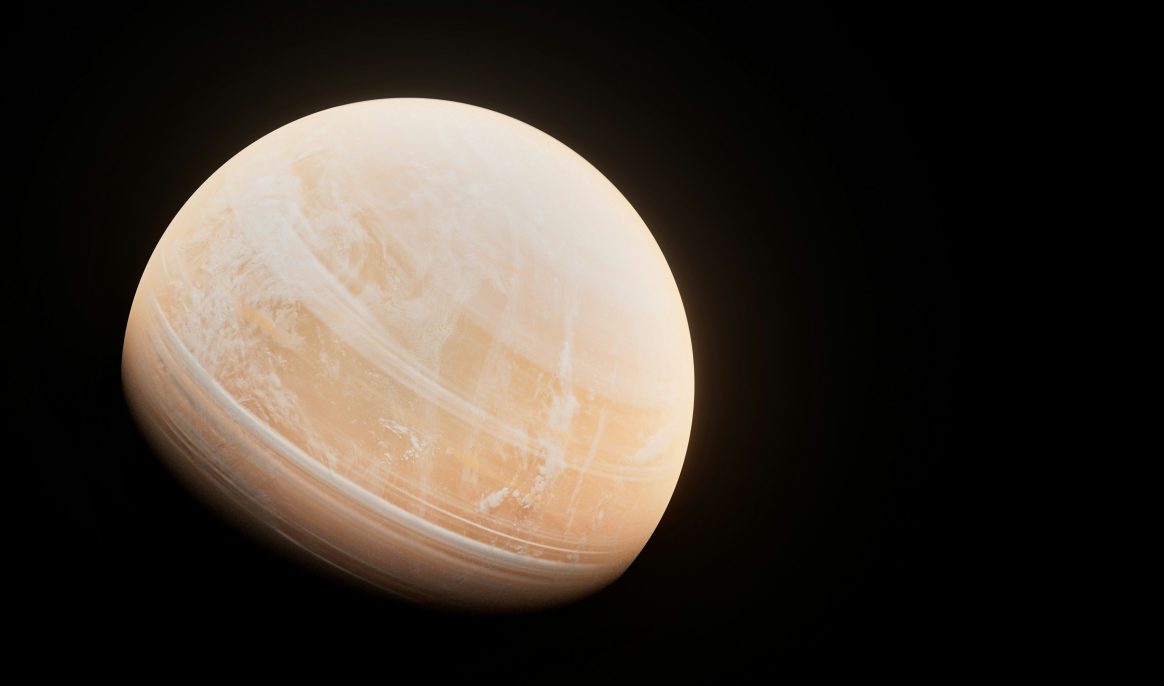
Titan, a moon of Saturn with its seas of hydrocarbons, is viewed by some experts as the “Persian Gulf” of the solar system at a time when the closure of the Strait of Hormuz and attacks on infrastructure are plunging the planet into a new energy crisis. A recent study suggests that, over the course of centuries, this icy moon could become humanity’s energy and logistics outpost in deep space.
A “Cosmic Hormuz” Saturated with Hydrocarbons
The current crisis has brought home a simple fact: nearly one-fifth of the world’s oil passes through Hormuz, the Persian Gulf’s de facto tap, before the conflict caused its closure and damaged several strategic fields and terminals in the Gulf. In just a few weeks, the global supply of oil and gas was permanently curtailed, fueling soaring prices, rationing measures, and a cascade of economic tensions.
Billions of kilometers away, Titan presents a dizzying counterexample. Jean-Dominique Cassini (1635–1712), a French astronomer, demonstrated that this moon harbors reserves of liquid hydrocarbons (methane, ethane) hundreds of times greater than all proven oil and gas reserves on Earth. On Titan, these reserves are concentrated in polar seas and lakes and in immense organic dunes. A NASA-supported study details how this abundance, combined with an oxygen-rich water-ice crust, could fuel local production of fuels, plastics, building materials, and even synthetic food.
Titan: A Laboratory for Self-Sufficiency Rather Than a New Fossil Fuel Eldorado
The appeal of Titan does not lie in the unrealistic idea of transporting its “cold oil” to Earth to bypass the Strait of Hormuz, but in the possibility of designing space-based societies less dependent on corridors as vulnerable as the strait separating Iran from Oman (UAE). The study led by Conor A. Nixon envisions a two-stage approach: nuclear propulsion to traverse the Earth–Saturn distance, followed by in situ extraction of hydrocarbons to fuel an exploration fleet heading toward the icy outer reaches of the Solar System.
Titan thus becomes a distorting mirror of our earthly dilemmas. Beneath its dense atmosphere—which effectively shields against radiation but requires survival at –179 °C—lies an environment where energy is abundant but difficult to access, and where any management error would be fatal. At a time when the closure of a single strait is enough to cripple our economies, this orange moon reminds us that no El Dorado—whether on Earth or around Saturn—exempts us from thoroughly rethinking our relationship with resources and energy conservation.
Share: