©Astra Liu via Unsplash
-
Jun 23, 2026 14:45
Qantas announces the first direct Sydney-London route as part of Project Sunrise: takeoff in October 2027, tickets on sale starting in February. It will be the world’s longest commercial flight.
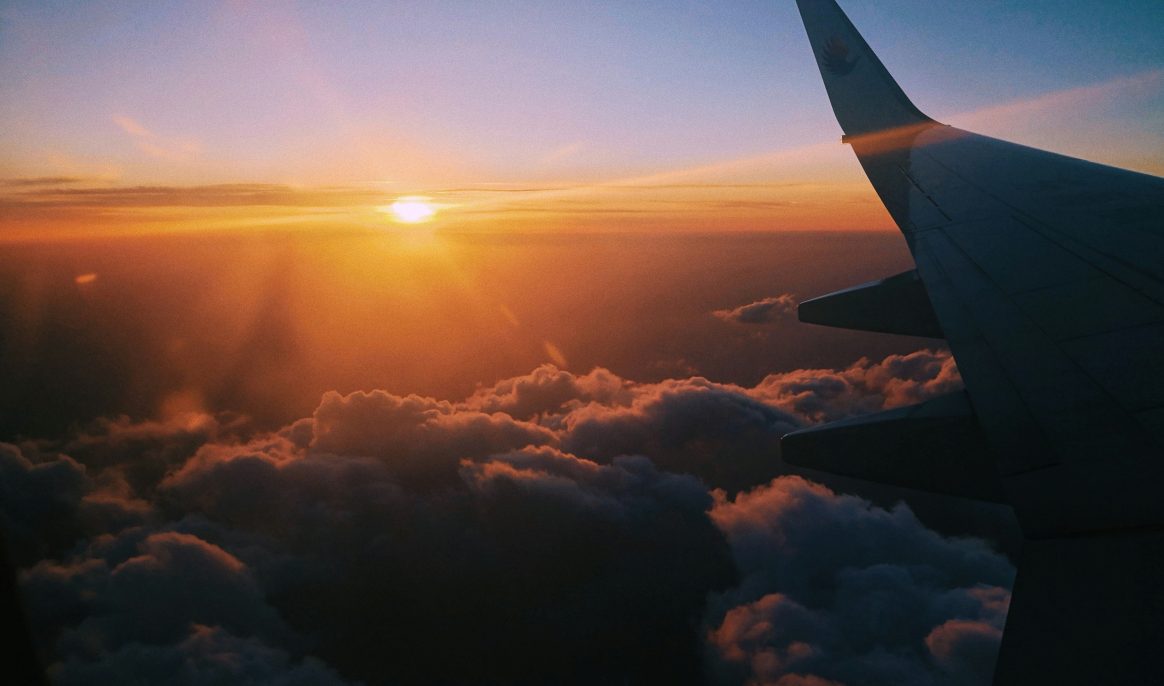
A 22-hour flight covering no less than 16,000 kilometers, all nonstop. These are the details of the route that Qantas has just officially announced between Sydney and London Heathrow, the first step in Project Sunrise. For years, this program by the Australian airline has aimed to break what is known in Sydney as “the tyranny of distance.” The launch is set for October 2027, with tickets going on sale in February of that same year.
From the “Kangaroo Route” to nonstop flights
The announcement came from Toulouse, where Airbus unveiled the first A350-1000ULR painted in the carrier’s colors. This will mark the first time that the Kangaroo Route—the historic connection between Australia and the United Kingdom—will be flown nonstop from Australia’s east coast. Qantas has operated the route between Sydney and London since 1947, when the journey took four days and required seven stopovers: in Darwin, Singapore, Calcutta, Karachi, Cairo, Castel Benito, and Rome.
The world’s longest commercial flight
This direct route will become the world’s longest scheduled flight, with a duration of up to 22 hours. It will thus dethrone Singapore Airlines’ Singapore-New York flight, which lasts just under 19 hours. Compared to current routes with stopovers, this direct flight will save passengers up to four hours of travel time. The existing alternative, flight QF1 with a stop in Singapore, currently takes about twenty-five hours in total.
A custom-built aircraft
It was by no means a given that an aircraft could cover such a distance with a full load of passengers. No commercial aircraft currently in service is capable of flying such routes: in 2019, Qantas conducted test flights with Boeing 787s carrying at least a minimum number of passengers to demonstrate the feasibility of the route. The A350-1000ULR was specially built for Project Sunrise, with an additional 20,000-liter fuel tank that allows it to fly more than 16,000 kilometers and remain airborne for up to 22 hours. Qantas will receive a total of twelve of these aircraft, each configured with 238 seats across four classes. This seat density is much lower than usual, designed to make spending nearly an entire day in the air more bearable.
Five years behind schedule
The program did not reach completion without a hitch, as the delivery of the first aircraft was delayed by five years due to the impacts of COVID-19 and supply chain issues. A second aircraft is already in the testing and certification phase, following a maiden flight in early June.
A message from the CEO
Here are the remarks from Vanessa Hudson, CEO of the Qantas Group:
“Qantas was born out of the belief that the distance separating Australia from the rest of the world should never be a barrier. The pioneering spirit of generations of our employees has charted this course ever since, and today we are taking the most significant step in this mission throughout our 105-year history. Ever since we first flew the Kangaroo Route in 1947—with seven stopovers on the way to London—each generation of aircraft has eliminated one stop along the way. Today, we’re eliminating the last one. In 2017, we committed to Qantas conquering the final frontier of long-haul air travel and connecting Australia’s east coast directly to London—something that had never been possible before. Starting in October 2027, that promise will become a reality.”
The name “Project Sunrise” is a nod to the past: it refers to the “double sunrise” endurance flights of World War II—flights so long that crews would see the sun rise twice.
After London, New York
London will lead the way, but it won’t be alone. The second route will be Sydney–New York JFK, expected sometime in 2027, with Qantas set to confirm the exact date early next year. Details of direct interest to future ticket buyers—namely, schedules, frequencies, and, above all, the fares that will be charged—still need to be clarified.
Source: qantasnewsroom.com.au
Share: