
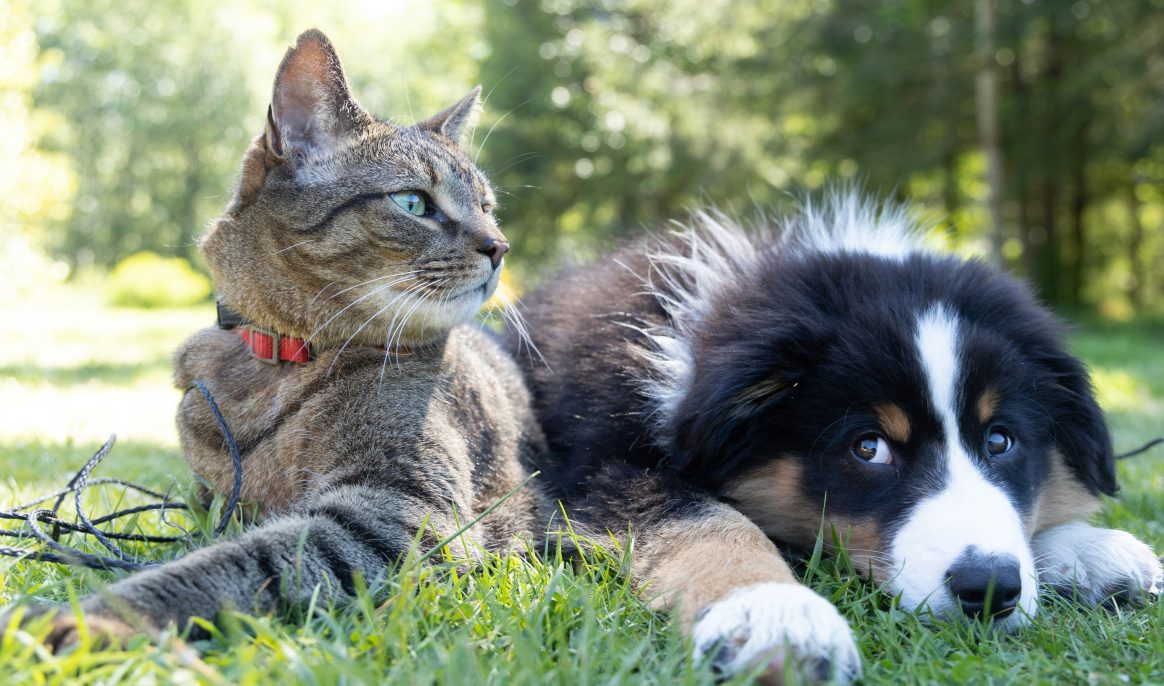
©Andrew S via Unsplash
-
Jun 18, 2026 14:12
An ethological study compares the reactions of dogs, cats, and children when faced with a lost object: dogs and toddlers help spontaneously, while cats ignore us.
How many times, while desperately searching for our house keys or wallet, have we seen our dog approach with a questioning look, while our cat looks away? What for centuries was dismissed as mere common sense now has scientific validity and a very specific ethological explanation.
In fact, a team of scientists from the HUN-REN–ELTE Comparative Ethology Research Group, in collaboration with Eötvös Loránd University in Budapest, Hungary, decided to analyze this phenomenon in depth through an unusual comparative experiment. The researchers sought to map spontaneous prosocial behavior—that is, the innate impulse to perform an action that benefits others, without receiving immediate reward or having undergone prior training or learning.
The sponge test
The research protocol compared three specific subjects: dogs, cats, and children aged 16 to 24 months. The situation simulated by the researchers in the laboratory was seemingly simple: the human caregiver began searching for an object hidden in the room (in this case, a simple dishwashing sponge), clearly showing signs of difficulty but without explicitly asking for help.
The results showed that more than 75% of the dogs and children responded to the situation by spontaneously pointing out the hiding place or retrieving the object in question. In contrast, domestic cats displayed total and systematic indifference to the problem faced by their human companion.
A question of millennia: The clock of domestication
The cornerstone of this vast behavioral difference does not lie in any supposed selfish malice on the behalf of cats, but in the profound and asymmetrical process of coevolution that binds humans to these different species.
Melitta Csepregi, lead author of the Hungarian study, clarified that simply sharing the same roof or forming an emotional bond is not enough to generate human-like cooperative behavior. Dogs benefit from a history of ancestral cooperation that began 30,000 to 40,000 years ago—an immense span of time that has literally shaped its brain, synchronizing it with our daily needs and states of anxiety.
What sets the domestic cat apart: Its independence
The domestic cat, on the other hand, has taken a radically different path, marked by a process of self-domestication that began about 9,500 years ago from a wild ancestor. Cats drew closer to humans out of pure opportunism (particularly to hunt mice in attics) and still retain their solitary nature to this day.
The experiment showed that cats choose to cooperate only if the hidden object is of direct interest to them, such as a treat or their favorite toy. The study’s findings make clear that there are neither “good animals” nor “bad animals”: a cat’s indifference is simply a reflection of its greater independence and lesser dependence on humans compared to dogs.
Source: Animal Behaviour
Share: