©Unsplash
-
Jan 22, 2026 11:00
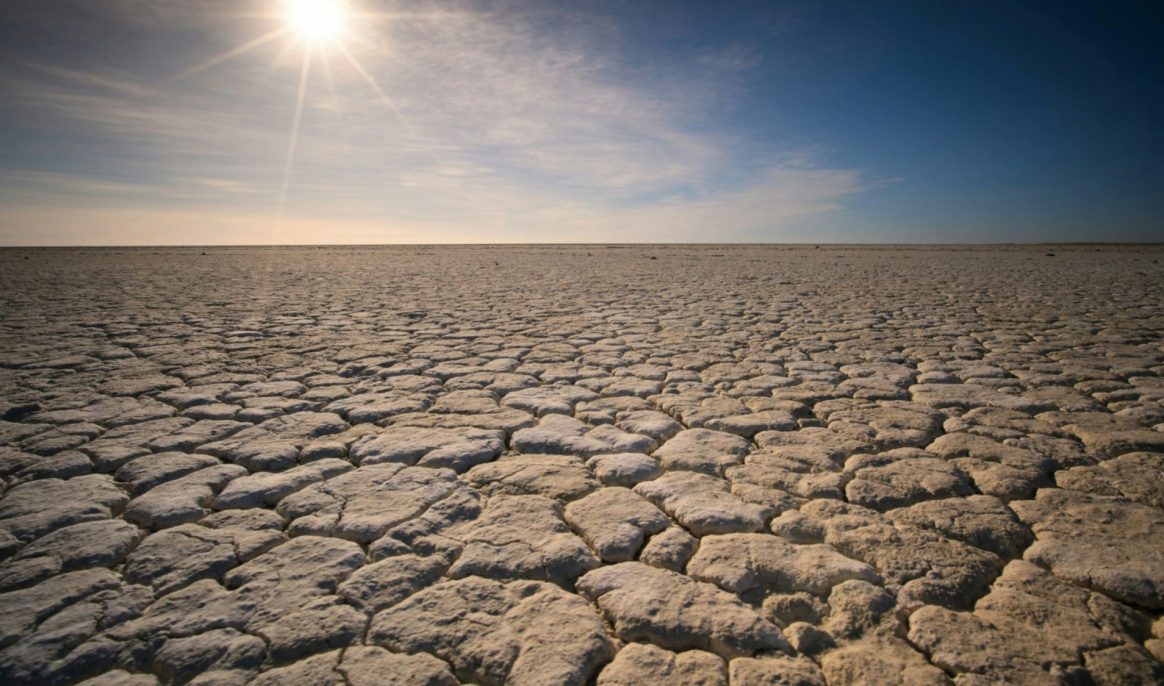
According to the United Nations, a growing proportion of the planet is now living in a structural situation of water bankruptcy: a point beyond which rivers, water tables, lakes and glaciers can no longer recover their historical levels. This notion is at the heart of a new report by UNU-INWEH, the UN's water think-tank, which marks a break in the way water scarcity is viewed on a global scale.
The document, published in the run-up to the 2026 UN Water Conference, argues that many regions are now sustainably living "beyond their hydrological means". This is a post-crisis failure: use and pollution have exceeded the regenerative capacity of natural systems for too long.
The report deliberately uses economic language. Many countries, the authors explain, first consumed their entire annual 'income' from renewable water, and then begun their 'savings': deep aquifers, glaciers, wetlands. The result is an account in the red that can no longer be reset to zero.
The consequences are already visible. Around 70% of the world's major aquifers are in long-term decline; more than half the world's major lakes have lost volume since the 1990s; dozens of major rivers no longer reach the sea for part of the year.
"Many regions are living beyond their hydrological means, and many critical water systems are already bankrupt," says Kaveh Madani, Director of UNU-INWEH and lead author of the report.
One of the clearest aspects of the document is the distinction between climate variability and man-made drought. Increasingly, water scarcity is not due to the absence of rain, but due to decades of abstraction and degradation. Even a seemingly wet area can become water-starved if the balance between inflow and outflow is disrupted.
Agriculture plays a central role, absorbing around 70% of the world's freshwater withdrawals. Today, over 170 million hectares of irrigated land are under high water stress, while salinization has already damaged vast areas of arable land. "Millions of farmers are trying to produce more food with dwindling water resources," Madani warns.
It's not just arid countries that are suffering from water failure. Water systems are interconnected by trade, migration and food markets. More than half the world's food is produced in regions where water reserves are declining or unstable. When water runs out in a basin, the effects are felt in terms of prices, food security and social tensions.
According to the report, almost three quarters of humanity live in countries classified as water insecure or severely water insecure. More than 4 billion people experience severe water scarcity at least one month a year; 2.2 billion have no access to safely managed drinking water.
The political message is clear: continuing to chase after emergencies is no longer enough. The UN is calling for a paradigm shift towards water bankruptcy management, which means setting credible limits, protecting the natural capital that produces and stores water, and supporting just transitions for the communities most affected.
Water, the report stresses, is not just a risk. It can become a concrete platform for cooperation in a fragmented world, an investment capable of generating cross-benefits for climate, biodiversity, soil, health and food security.
"Water scarcity is becoming a factor of fragility, displacement and conflict," warns Tshilidzi Marwala, Rector of the United Nations University. Recognizing this does not mean giving up, but rather acknowledging the limits in order to avoid irreversible losses. Postponing decisions, warns the UN, will only deepen the deficit.
Share: