©Unsplash
-
Apr 19, 2026 19:00
Norway orders 20 electric hydrofoil ferries: from 2027, they'll be cruising the fjords, with less noise, reduced waves and fast recharging.
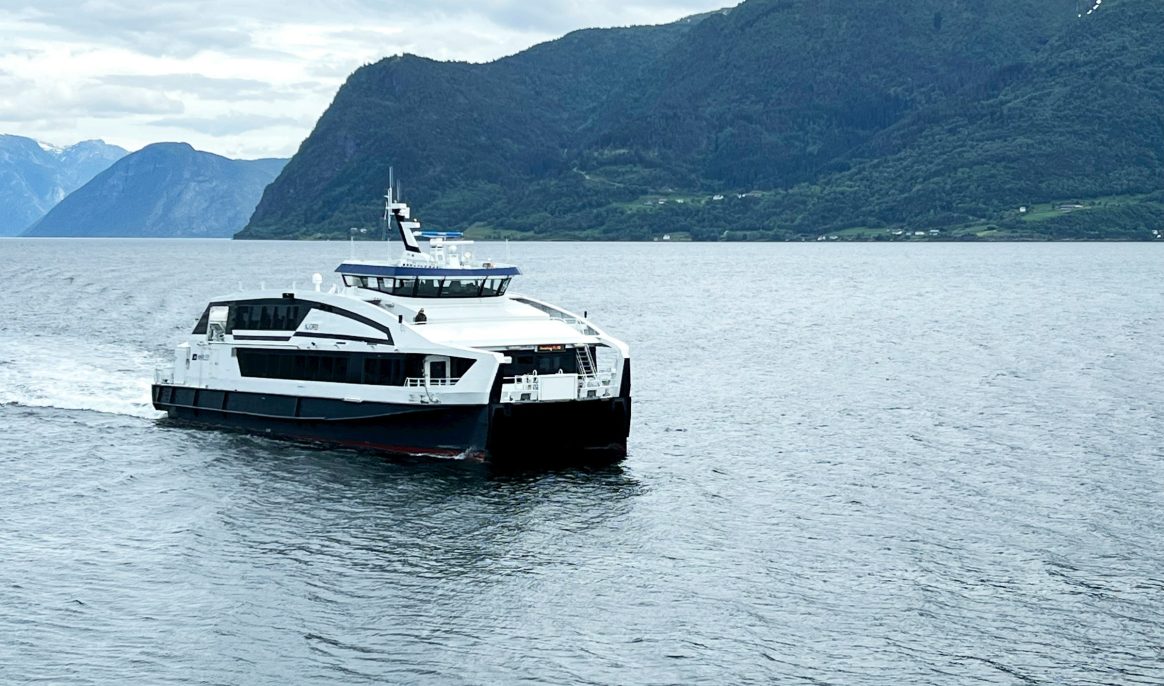
In the fjords, the waterways bring rhythm to every day life. People use them to get to work, to move from one community to another, and to keep a coastline with long distances and continuous stopovers alive. This is why the order signed by Boreal carries such weight: the Norwegian operator has purchased 20 electric ferries, in what is being billed as the largest electric fleet of its kind announced to date. The first two units will arrive in 2027, with the others to follow in stages up until 2030.
Context helps to explain why this choice makes particular sense here. In 2025, 100% electric cars accounted for 95.9% of new registrations in Norway, a level that has made the country Europe's most advanced laboratory for battery-electric mobility. The next, almost inevitable, step involves the sea: along the Norwegian coast, rapid transport remains essential, and it's precisely here that diesel engines have continued to dominate for longer.
Up until now, the limit has always been the same: the electric ferries available either offered too little range, or speeds ill-suited to real lines to keep to timetables and cover long distances. The Candela P-12 aims to fill this gap. It cruises at 25 knots, or around 46 kilometers per hour, and reaches just over 74 kilometers. These are figures designed for roads that were previously the preserve of diesel engines.
A very concrete point: recharging. These electric ferries can be refueled in around an hour using standard DC fast charging stations, without requiring ports to install gigantic and much more costly systems. For a coastal network of multiple ports of call, small towns and mixed routes, this is the difference between an elegant project on paper and a means of transport that can actually be put into service.
There's also an aspect that passengers will notice immediately. During tests in Stockholm, the wave of the P-12 was measured at 13 centimetres, comparable to that of a small tender with an outboard motor. In-cabin noise levels remained around 63-64 decibels, below the levels typical of many traditional ferries and speedboats. To add to this, the digital control system reads the waves using sensors and adjusts the hydrofoils in real time, enabling more stable sailing even in heavy seas.
A test has already demonstrated that the boat can also live off the brochures. In February, Candela announced that the P-12 had completed what it describes as the longest electric crossing in the industry, between Sweden and Norway, with recharging en route. This is also essential, seeing as electric ferries are judged on repeated service, on kilometers actually covered and on schedules kept when the sea ceases to be a postcard.
Norway has already pushed electric power on the roads to the point of near saturation. Now it's trying to do the same on its most tenacious and exposed high-speed maritime links.
Share: