©Pexels
-
Apr 01, 2026 04:00
There's a word that's often misused when talking about green hydrogen: sustainable. This time, however, it's neither a slogan nor a vague promise. A scientific study conducted by the University of Granada has given it a concrete meaning. For the first time, the study attempts to measure, with figures to back it up, the extent to which marine energy for green hydrogen can stand up to comparison with other renewables.
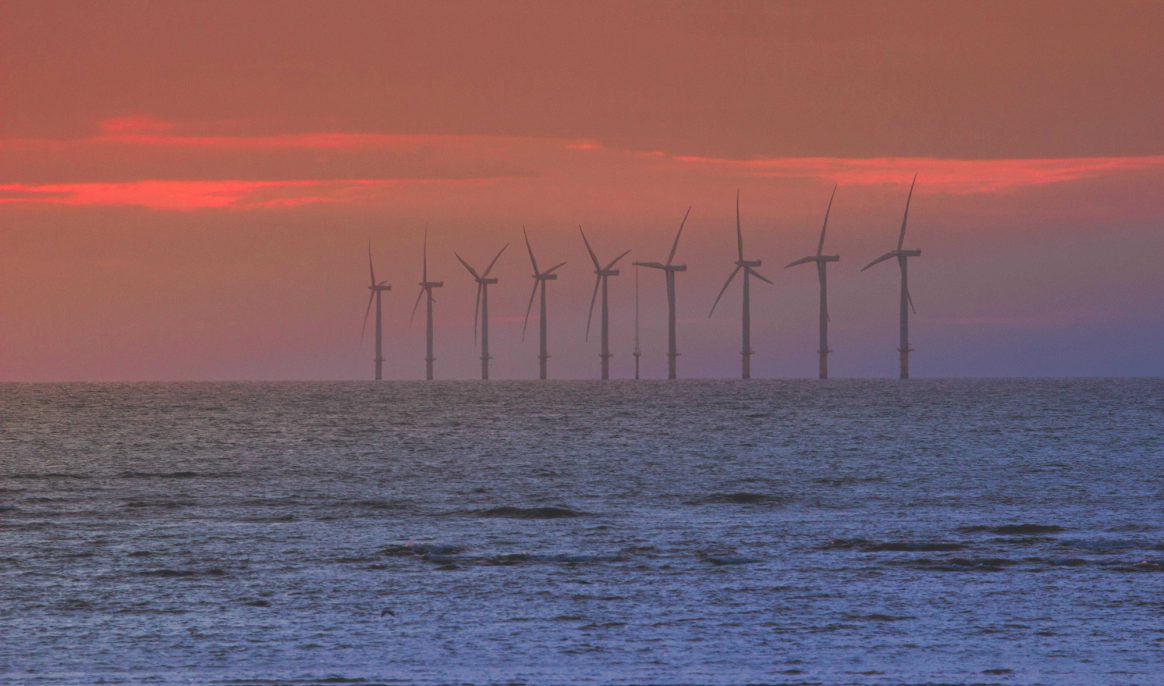
The question is not to say that the sea is 'the future'. The question is to understand whether harnessing offshore wind and waves to produce hydrogen really works, what the resource cost is, and what impact it leaves behind. And this is precisely where the research marks a clear departure from everything that has been done to date.
The real question is not whether it works, but how profitable it is over time.
The Spanish researchers have turned the conventional approach on its head. Instead of simply assessing the amount of energy produced by offshore facilities, they have analyzed the entire process: construction of offshore infrastructures, day-to-day operation, maintenance and, ultimately, decommissioning. Everything is taken into account, with no shortcuts.
This means facing up to what usually remains in the background: materials used, consumption of natural resources, indirect emissions, hidden energy costs. It's an unrestricted analysis that finally compares marine energy with conventional solar and wind power on a realistic footing.
The result is less obvious than it might seem. In many coastal conditions, offshore infrastructures powered by wind and waves have a favorable environmental record, with levels of sustainability comparable to those of already mature renewables.
One of the aspects that makes marine energy particularly attractive is its continuity. The sea does not 'switch off' suddenly and, especially along many of Europe's coasts, it offers more constant energy availability than other sources. This is an important factor when it comes to green hydrogen production, which needs stability to be efficient.
The study shows that, precisely because of this regularity, offshore installations can maintain positive environmental performance in different scenarios, adapting to different geographical contexts. This is not a niche technology designed for a few ideal locations, but a potentially reproducible system.
The most interesting part of the research is the method used. The scientists have combined two analysis tools which, together, tell a complete story. On the one hand, there's the assessment of resources consumed and emissions generated during plant operation. On the other, a broader look at the entire life cycle, which also takes into account what happens before and after energy production.
This dual approach offers a less ideological and more concrete picture. Marine installations for green hydrogen are not 'clean by definition', but they do prove to be competitive in terms of sustainability when the whole picture is considered. And it's exactly this kind of information that's needed to decide where to invest, and with what expectations.
Today, marine energy for green hydrogen is not a magic wand. It is, however, a technology that is finally ceasing to be just a futuristic promise and starting to enter the realm of concrete decisions. With verifiable data, real-life comparisons and clearly identified limits.
Share: