©Jordan Durzi via Unsplash
-
May 18, 2026 09:00
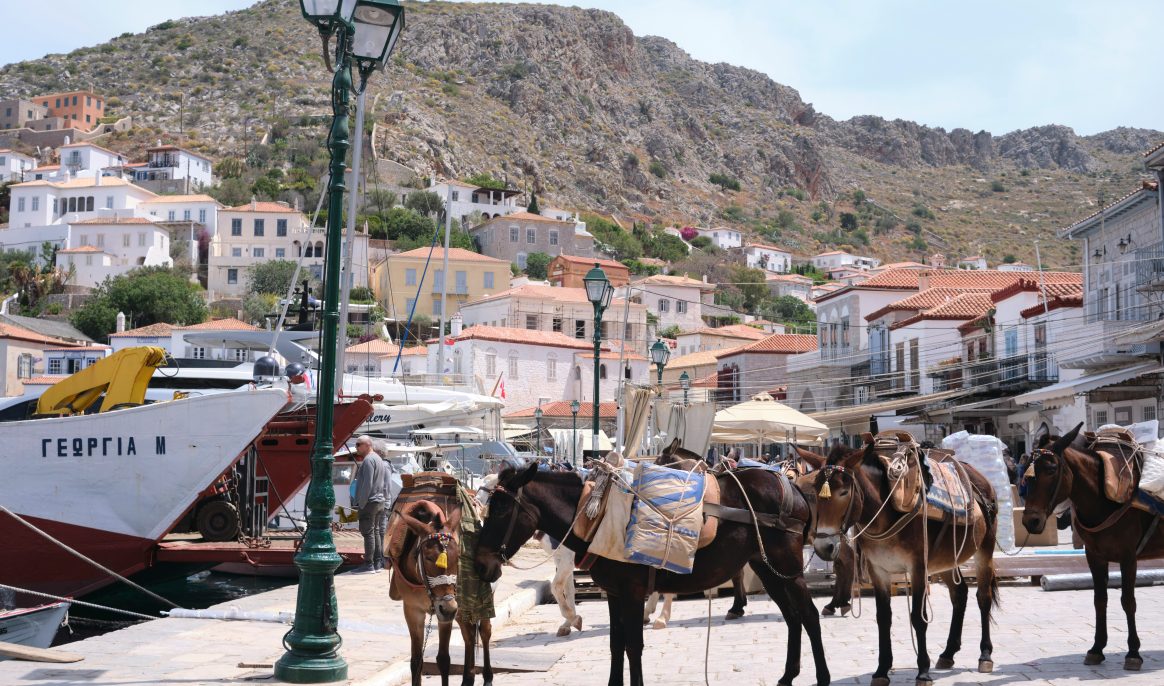
On the island of Hydra, in the Saronic Gulf, cars have been banned since the 1950s. Accessible in 90 minutes by ferry from Athens, the island can only be explored on foot or by mule.
A two-hour ferry ride from Piraeus, in the Saronic Gulf, there's a Greek island where cars are banned, as are bicycles. In fact, Hydra banned motorized vehicles in the 1950s in order to preserve its authentic character of cobbled lanes, steep staircases and small white and blue houses facing the port.
Getting around Hydra
The ban is based on a presidential decree in force since the 1950s, which prohibits all wheeled vehicles (cars, motorcycles, bicycles and quads). The only exceptions are a few municipal vehicles authorized by the relevant ministry in Athens, such as garbage trucks, ambulances and fire-fighting vehicles. For everything else, the island relies on one of the world's largest herds of working mules.
The island's most popular means of transport is on foot or on the backs of mules and donkeys: the same ones that carry suitcases, furniture, building materials and provisions along the island's steep paths. This is confirmed by HydraDirect, the local information site that also manages the section devoted to the island's protection order. Water-taxis complete the system to reach the most remote beaches, otherwise accessible only on foot or, again, by sea.
In fact, the topography makes this prohibition almost natural: the village is built amphitheatrically, on a steep slope, and its staircase lanes, climbing up from the port, would render any wheeled vehicles practically useless.
A history of art and celebrities
The absence of traffic has, over the decades, attracted artists and celebrities alike, including Leonard Cohen, who bought a house here in 1960, and Sophia Loren, who filmed "Boy on a Dolphin " here in 1957. Other illustrious visitors include Maria Callas, Pablo Picasso and Henry Miller.
What to see and how to get there
Discover Greece, the official Greek tourism portal, describes Hydra as a "cosmopolitan and elegant" island, with 18th-century mansions, marble churches and alleyways so narrow they put any geolocation service to the test.
There are some 300 churches and 6 monasteries. The historic center is listed as a protected monument. There is no airport and the only access is by sea. From spring onwards, the island starts to come alive, while remaining far removed from the mass tourism that characterizes destinations such as Santorini and Mykonos.
Share: