
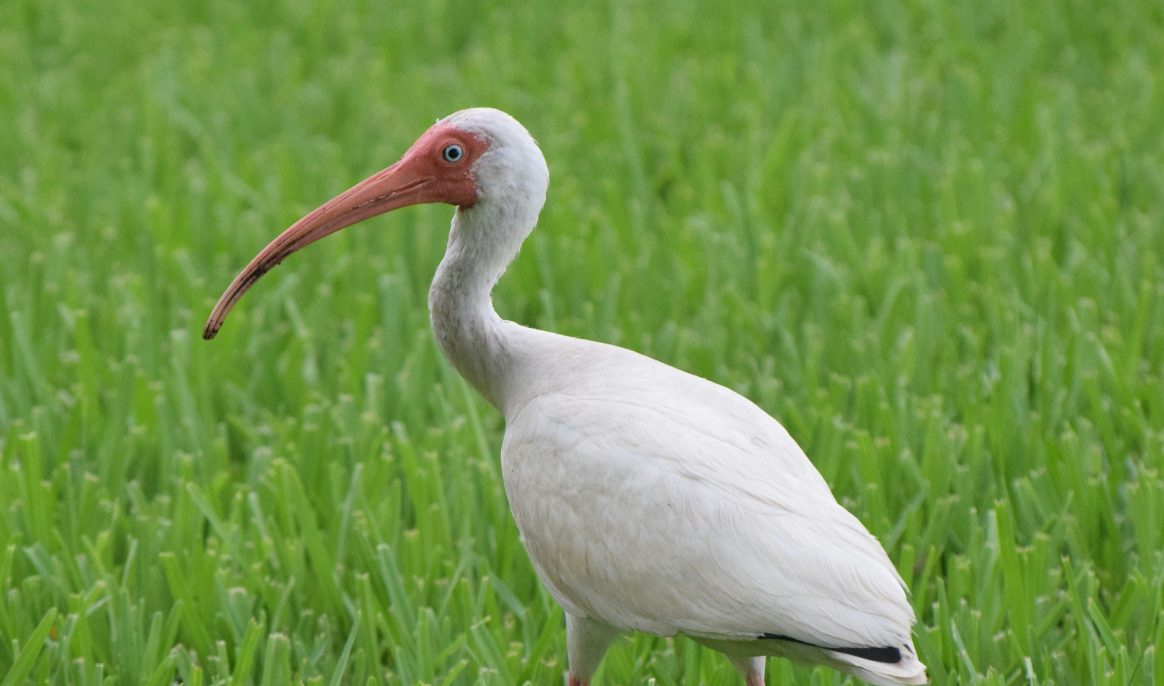
© Tom Nora via Unsplash
-
Jun 02, 2026 16:00
Decades after they disappeared from the wild in Japan, eight crested ibises, known as "tokis", have been released back into the wild at Hakui, on the coast of the Sea of Japan. This long-awaited flight is part of a long-standing conservation effort on the island of Sado, and marks a new stage for this emblematic species, once considered extinct in the wild of the country.
The toki, or crested ibis (Nipponia nippon), is a graceful wader, 75-80cm long, with slightly pinkish-white plumage and spectacular orange-pink highlights under its wings when in flight. Its long, downward-curving beak and the bare red skin around its eyes give it an instantly recognizable silhouette, especially when silhouetted against the rice paddies and wetlands it is so fond of.
A bird of the traditional agricultural landscapes of East Asia, the toki once frequented much of Japan, but also parts of China and the Korean peninsula. It feeds on small fish, amphibians and invertebrates that it captures in the mud of rice fields and ponds, acting as an indicator of the good health of these environments.
In Japan, tokis have paid a heavy price for hunting and the transformation of the countryside: intensification of agriculture, drainage of wetlands and massive use of pesticides have gradually destroyed their habitat and food resources. By the 1970s, the species had disappeared from the main island of Honshu, surviving only on the island of Sado, off the northwest coast.
The last wild Japanese ibises were captured in an attempt to launch a captive breeding program, but the last native individual died out in Sado in 2003. In the meantime, a major turning point occurred: in China, the species, also thought to be extinct in the wild, was rediscovered in the early 1980s, paving the way for cooperation between the two countries.
In 1999, China offered Japan a pair of tokis to support an artificial breeding program. The first successes in captivity at the Sado conservation center in the early 2000s made it possible to envisage not only the species' survival in aviaries, but also its gradual return to rural landscapes.
It is on Sado that the rebirth of the toki is patiently being built. In 2008, ten ibises bred at the conservation center were released back into the wild on the island. Since then, releases have continued twice a year, with pairs now breeding in the wild. By 2020, an estimated 450 tokis had returned to the wild on Sado, a sign of a population on the road to self-sufficiency thanks to a high survival rate.
This success owes much to the transformation of agricultural practices. In Sado, local authorities are encouraging "toki-friendly" rice cultivation, with reduced use of pesticides, maintenance of underwater areas, creation of micro-habitats and diversification of aquatic fauna. A system of certification and public premiums promotes this "toki-friendly" rice, which is sold at a higher price than conventional rice and compensates farmers for yield losses. This alliance between conservation and the local economy makes toki a symbol of the transition to a more biodiversity-friendly agriculture.
The eight ibises released at Hakui, in the Noto region (north-central Japan), were raised and protected at the Sado conservation center before being transferred to the north coast. Their flight took place during a public ceremony attended by Crown Prince Akishino, Princess Kiko and local officials, to the applause of local residents as the birds scattered into the sky.
This was a highly symbolic event for the region hard hit by the earthquake of January 2024, which devastated part of the Noto peninsula, causing extensive damage to people, property and heritage. Here, the reintroduction of a long-extinct species is seen as a sign of rebirth, a reminder that landscapes and communities can be rebuilt, with greater integration of ecological issues.
A total of ten other tokis are still waiting to be released, which should gradually increase the density of the region's small wild population and eventually create a new nucleus for the species outside Sado.
The return of the toki shows that consistent public policies, international cooperation and long-term work with farmers can revive a species on the brink of extinction. For visitors, Sado has become a showcase for this successful cohabitation. The "Toki no Mori Koen" park and observatories educate the public about the bird's ecology and the rules of respectful observation: keep your distance, don't feed the birds, be discreet, especially during nesting season. Beyond Japan, the toki illustrates what could be a new relationship between threatened species and human activities: no longer opposed, but co-constructed, with agricultural landscapes conceived as living habitats.
Share: