
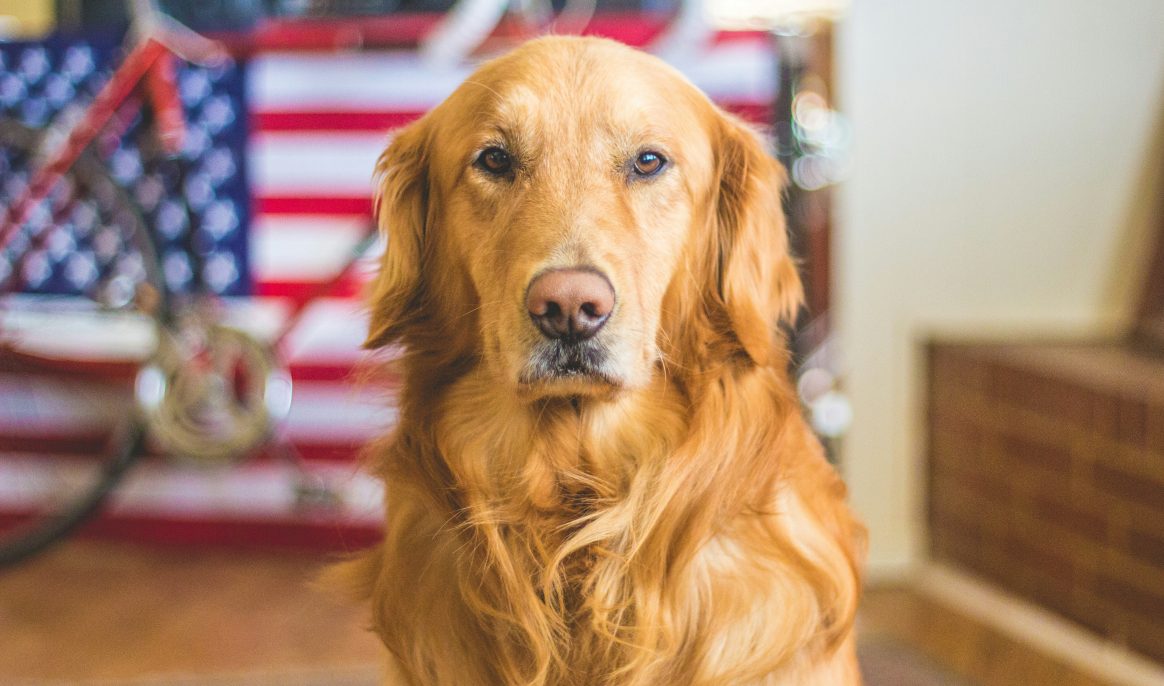
©Caleb Fisher via Unsplash
-
Mar 31, 2026 06:00
Anyone who lives with a dog has seen it before. A voice is raised, an argument flares up in the house, and he comes, approaches, stays put. It does nothing conspicuous, but chooses exactly where to stand. When people argue, the dog comforts the victim, and today this everyday observation is also confirmed scientifically.
This is proven in a study published in the journal Ethology, by a research group from the University of Buenos Aires, which deeply analyzed the behavior of dogs when they witness an argument between their owners. The goal was not to tell a nice story about animal empathy, but to understand whether there really is a form of 'comfort' that dogs employ toward people suffering aggression, even if only verbally.
How dogs respond to arguments between humans
The scientists designed two separate experiments, deliberately varying the intensity and duration of a simulated conflict between two members of the same family. The dogs involved, 23 in total and belonging to breeds as diverse as poodle, dachshund, Siberian Husky and Border Collie, witnessed a staged argument within the domestic environment.
The dogs were then asked to participate in the argument.
In some cases the argument was brief and controlled, in others more intense and prolonged. The dogs witnessed the scene without being directly involved, but what happened immediately after the argument was significant.
During the quarrel, the dogs were not directly involved
During the argument, the animals were more likely to look at the person being attacked. Once the conflict was over, most approached the victim, staying close, seeking contact or simply sharing space. This was not a random response. These behavior patterns were clearly more common in those who seemed emotionally affected while avoiding the aggressor.
In many cases, the dogs not only sided with the victim, but also showed clear signs of stress. Repeated yawning, a slumped posture and slow, cautious movements indicated that the conflict was perceived as something unpleasant, even though it was not directed at them. This is an important step because it suggests that the dog is not just observing, but emotionally participating in the tension in between the family group.
What the dog feels when it witnesses an intense human conflict
If the argument was more intense, some dogs even paid attention to the aggressor, with behavior interpreted in ethology as peaceful signals. Not a positive attitude, but an attempt to reduce general tension. As if the dog is trying to restore balance to a situation it perceives as destabilizing.
In addition to the comforting behavior, the dogs showed clear signs of stress, such as frequent yawning, drooping postures, low ears and tail, biting and restlessness. These signs indicate that the conflict was perceived as aversive, despite the fact that it was not directed at them.
A surprising finding concerns affective bonding. The study examined whether the dogs chose the victim based on the person with whom they had the closest bond. The answer was no. Even when the aggressor was the human with whom the dog was most closely related, the animal continued to offer support to the victim. Thus, the affiliative behavior appears to be driven not by personal preference, but by the emotional reading of the situation.
This study adds an important piece of the puzzle to the understanding of the human-dog relationship. It is not just a matter of training or habit, but a real ability to recognize complex emotional states and social dynamics. The dog perceives discomfort, shares it and acts to reduce it, even at the expense of experiencing stress itself.
The authors speak of a solid foundation for further research into these social-emotional skills and their impact on human well-being. For those who live with a dog, however, the conclusion is already clear: It is not just companionship. It is an active, silent and deeply empathetic presence, especially in the most difficult moments.
Share: