
©valentin
-
Jan 12, 2026 19:00
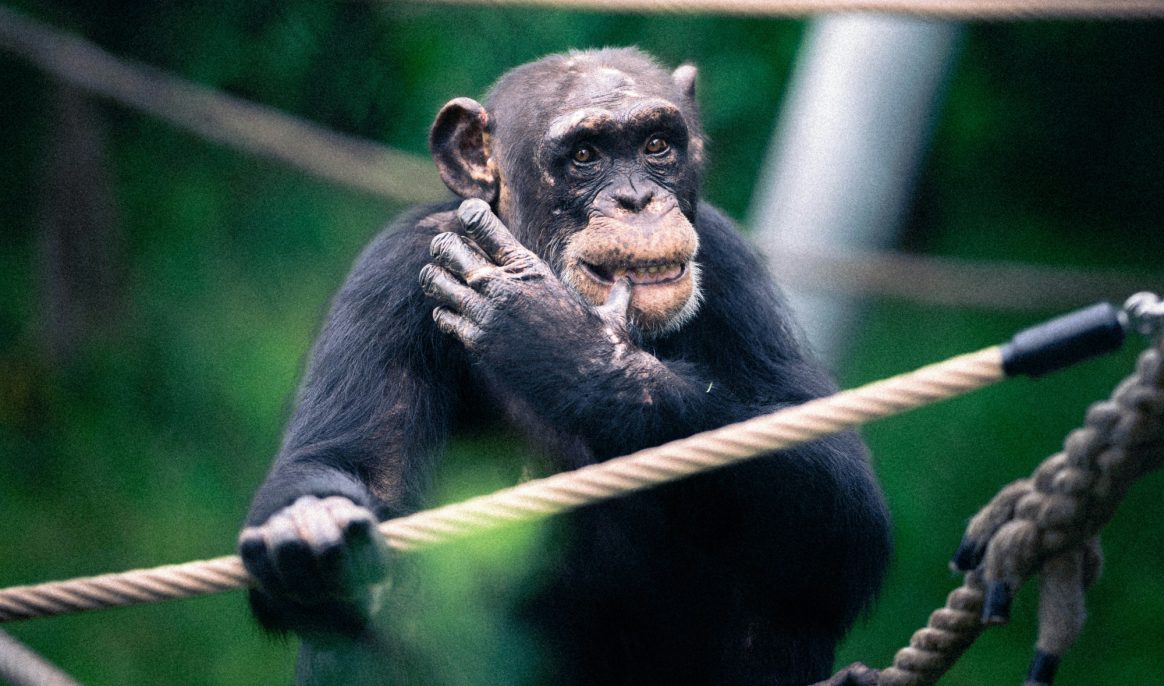
Ai, the 'brilliant' chimpanzee, has died at the age of 49 in Japan from multiple organ failure and age-related illnesses. Ai, originally from West Africa and transferred to Kyoto University in 1977, was involved in some of Japan's first scientific studies of the brains of non-human primates.
From an early age, the animal demonstrated unusual abilities: she knew over 100 Chinese characters, the English alphabet, the numbers zero to nine and even 11 colors.
She linked symbols to real objects
Research by primatologist Tetsuro Matsuzawa has shown how Ai was able to link symbols to real objects. In one experiment, she was shown the Chinese sign for the color pink next to a pink square and a purple square, and the chimpanzee correctly looked at the corresponding square.
In another test, when shown an apple, she reproduced its shape using a circle, rectangle and dot, creating a kind of 'virtual apple'. These cognitive abilities have made Ai a central figure in the understanding of memory, perception and symbolic learning in primates.
Escaping the cage
Ai was not only a brilliant monkey, but also curious and determined. In 1989, she managed to escape from her cage with another specimen, using a key to open the lock, a feat that demonstrated her practical intelligence and resourcefulness. In 2000, she gave birth to Ayumu, whose talents confirmed scientists' interest in transferring knowledge between generations of chimpanzees.
Over the course of her life, Ai has taken part in hundreds of experiments with computer-controlled keyboards, helping to establish a fundamental experimental framework for understanding the primate mind. Her results have been published in prestigious scientific journals, but she owes her popularity to the media, who have called her a 'genius' for her abilities. In 2017, to mark the project's 40th anniversary, Jane Goodall received a scarf inspired by one of her creations.
A life far from home
However, her life also reminds us of the harsh realities of life in captivity. Although Ai has contributed enormously to our knowledge, she was never able to live in her natural habitat, in the African forest from which she originated. Far from freedom and natural rhythms, she spent almost five decades in experiments and cages, a high price to pay for human knowledge.
Share: