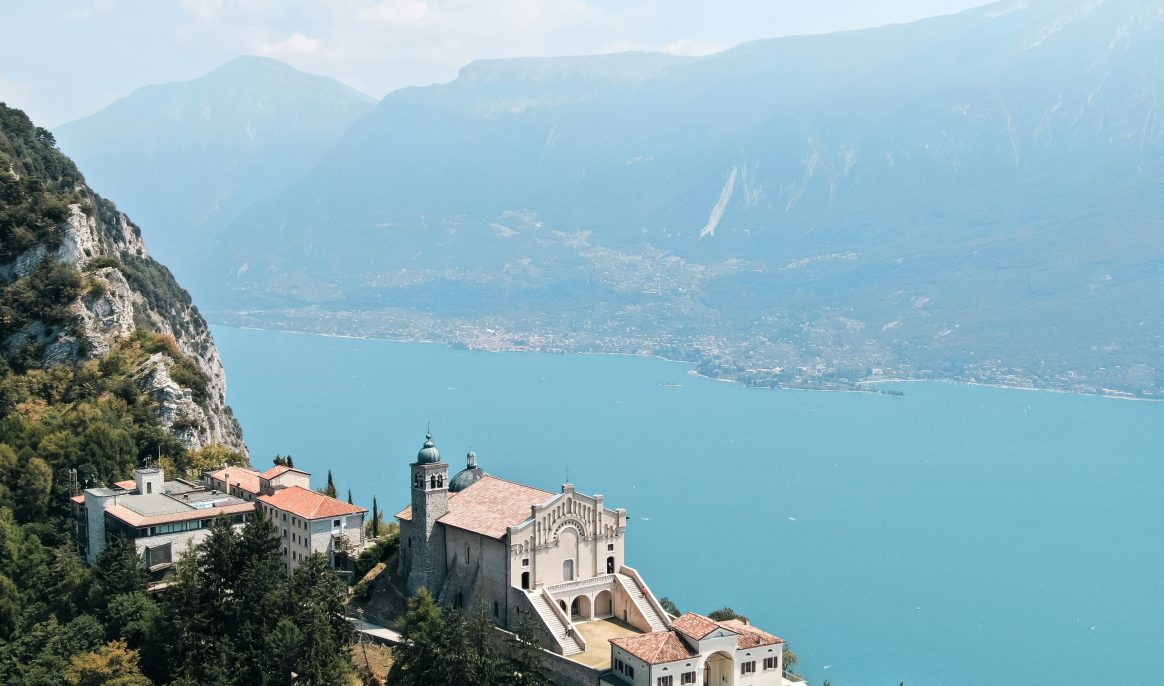
©Rasmus Andersen via Unsplash
-
May 12, 2026 11:07
After twenty years, the bottom of Lake Garda is starting to breathe again: an exceptional mixing of its waters, made possible by the intense cold and northerly winds, is regenerating the ecosystem by providing oxygen and nutrients.
An extraordinary event has just taken place in the depths of Lake Garda. This rare phenomenon, almost imperceptible to tourists strolling along its shores, is nonetheless crucial to the health of Italy's largest lake. After some twenty years, Lake Garda has completed a natural process of complete mixing of its waters, a sort of giant "breathing" capable of regenerating the entire lake ecosystem. The last such episode occurred in winter 2006. Since then, the lake had not managed to fully mix its surface and deep layers. This time, ideal climatic conditions set everything in motion again.
The decisive role of cold and wind
This exceptional event was triggered by a combination of very specific factors: freezing temperatures, strong northerly currents and a phenomenon known as homothermy. In concrete terms, water temperature has become virtually identical from the surface to the deepest depths. When this happens, the differences in density between the layers of the lake disappear. This is where the wind comes into play: it has pushed the water masses to mix completely, even beyond a depth of 270 metres. In large, deep lakes such as Lake Garda, which reaches 350 metres in places, this process is extremely rare. Under normal circumstances, only partial mixing is observed, and this is not enough to truly regenerate the seabed.
Oxygen at depth and nutrients rising to the surface
The data collected by the Appa (Environmental Protection Agency) multiparameter probe, installed in Riva del Garda between Lido Point and Sabbioni Beach, describe exactly what happened. On April 1, a temperature of 9.45°C was recorded, almost uniformly from the surface to the bottom. But the most significant data concerns oxygen: at a depth of 270 meters, its concentration rose by around a third, from 6.61 mg/l to 8.80 mg/l in just a few days.
In ecological terms, this represents a genuine natural recharge. Oxygen-rich surface water sank to the bottom, while deep water rose, carrying with it nutrients and trace elements accumulated over the years. This process is essential to avoid stagnation, preserve biodiversity and ensure the survival of the species that inhabit the deepest parts of the lake.
A positive signal, but also a climate warning
Specialists see this as excellent news for Lake Garda, which is once again demonstrating an astonishing capacity for self-regeneration. In the coming months, this mixing could also encourage an increase in phytoplankton and algal blooms, natural phenomena linked to the new availability of nutrients.
At the same time, however, new data are providing food for thought. In recent decades, Lake Garda's surface temperatures have risen steadily as a result of climate change. Today, the deeper waters are significantly warmer than in the 1990s. And this is precisely where the challenge lies: events such as the one that just occurred are becoming increasingly rare. To allow the lake to "breathe", we need really cold winters, strong winds and a climatic equilibrium that is increasingly difficult to achieve.
Source: Autonomous Province of Trento
Share: