
©Unsplash
-
Aug 01, 2026 10:00
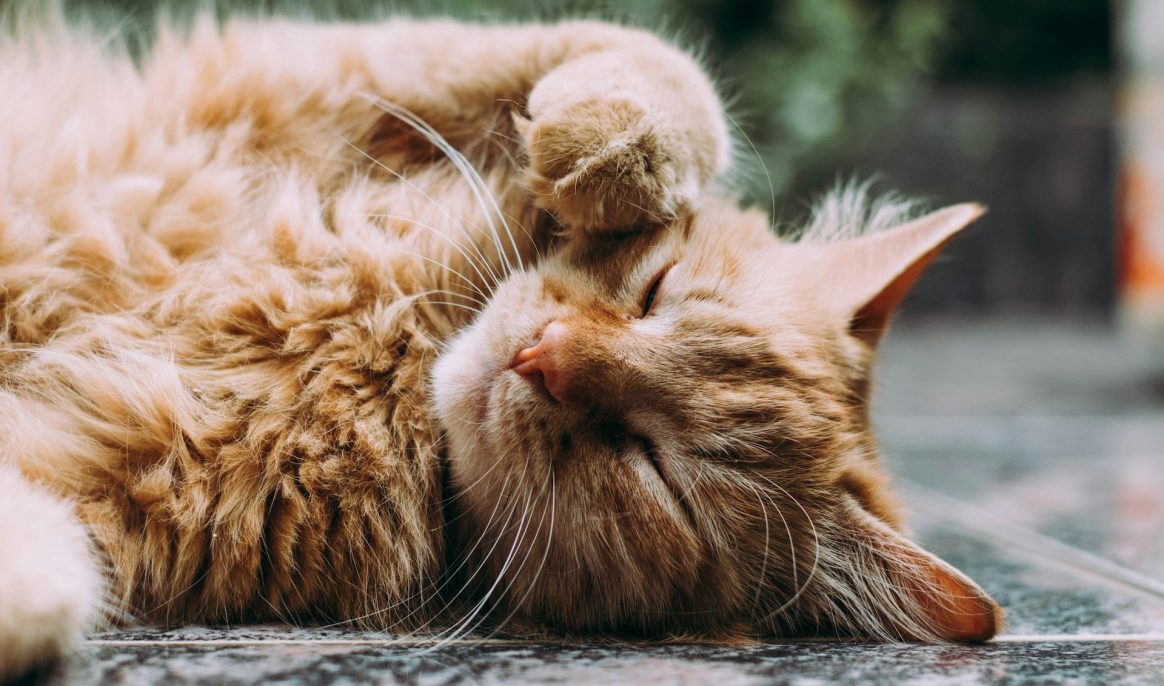
It happens every night. The cat leaps onto the couch, curls up next to you, starts kneading the cushion with its paws, and soon enough, there’s that purring. It’s five, eight, or sometimes even twelve years old. And yet, it behaves exactly like a kitten.
This is neither nostalgia nor regression. It’s neoteny. And according to Giorgio Celli, one of Italy’s greatest ethologists, who passed away in 2011, it’s the key to understanding how cats have won us over without us even realizing it.
Neoteny is a fascinating evolutionary phenomenon: certain species retain physical or behavioral characteristics typical of juveniles into adulthood. This is not a defect—quite the contrary. It is an adaptation that, in certain contexts, offers unexpected advantages. It is observed in some amphibians, such as the axolotl, which retains its external gills even as an adult. And it's observed, oh so clearly, in domestic cats.
In the case of cats, it’s not so much about physical changes as it is about behaviors. Purring, for example, originates as a communication signal between a kitten and its mother during nursing. In adult wild cats, it disappears. In domestic cats, however, it persists throughout their lives. The same is true for paw kneading—the motion kittens use on their mother’s belly to stimulate milk flow. No adult cat in the wild continues to do this. Domestic cats, on the other hand, repeat this behavior whenever they feel safe and content—often, in fact, right on top of you.
Meowing also conveys something similar. Adult wild cats communicate primarily through body language, eye contact, and posture. Meowing is a kitten’s call to its mother. And yet, the domestic cat does indeed meow—and often very insistently—especially when it wants something from us: food, attention, or an open door. It has figured out that it works—and it keeps using it.
Celli, an ethologist as well as a writer, playwright, and inveterate cat lover, devoted a large part of his work to these animals. In his books, he observed, described, and interpreted them. And one of his most brilliant insights concerns precisely behavioral neoteny.
Celli wondered whether, for the cat—an animal that knows no hierarchy—we humans might not, in fact, serve as a surrogate for the mother cat. Not in the literal sense, of course. But in a functional sense. We provide food, we ensure safety, we offer warmth—exactly as a mother would. And the cat, given its intelligence, has realized that maintaining certain infantile behaviors guarantees it all of this—forever.
According to studies in comparative ethology, the intelligence of an adult cat is comparable to that of a child around 18 months old. That’s no small thing. It’s the cognitive level at which a child understands that an object exists even when they can’t see it, knows how to look for it, and remembers where it is. An intelligence that’s already sophisticated, but still strongly tied to the need to be cared for. And the cat has turned this phase into a perfect evolutionary endpoint.
The cat’s speculative intelligence has recognized the benefits of neoteny and has made those advantages its own. It is no coincidence that, over the course of thousands of years, the domestic cat has remained physically small, with proportions reminiscent of a kitten or a human newborn. Large eyes relative to the face, a rounded head, and agile yet never threatening movements. All of these features combine to trigger an instinctive response of protection and care within us.
Evolutionary psychology has shown that certain physical characteristics—large eyes, a broad forehead, plump cheeks—automatically trigger feelings of tenderness in us. It is a mechanism that natural selection has refined to encourage us to care for our young. But it also works with other species. During the domestication process, cats“learned” to exploit this mechanism. And they benefit from it.
This isn’t manipulation in the negative sense of the term. It’s coevolution. We needed them to keep rats out of our attics; they needed us for food and shelter. But while dogs adapted by learning to obey, cats chose a different path: to remain like kittens. And it works a treat.
In a cat’s neonatal imprinting, there is a phase of early weaning managed by the mother, who in the wild brings her kittens small prey as food. When a two-month-old kitten finds itself facing a full food bowl brought by a human, it can’t help but associate this gesture with that of its mother. The emotional and nutritional bond is formed right there, at that precise moment. And once established, it’s hard to break.
Next comes the purring. Who can resist this endearing little creature capable of making not only its own diaphragm vibrate, but also the heartstrings of whoever is petting it? The question is rhetorical, of course. The answer is: no one. And the cat knows this perfectly well.
Carl Gustav Jung spoke of archetypes—those primordial images present in the collective unconscious of all humanity. Among them is the archetype of the child: a symbol of vulnerability, innocence, and pure potential. When we see a young one—any young one—an instinctive response of protection and care is triggered within us. But the domestic cat has taken it a step further: it has realized that by maintaining certain infantile behaviors, it can continue to elicit this response throughout its life.
Purring, for example, is a sound that, in nature, is unique to kittens while they are nursing. In adult wild cats, it disappears. In domestic cats, however, it becomes a permanent form of communication. The same is true for paw kneading—that rhythmic motion kittens use on their mother’s belly to stimulate milk flow. Adult cats continue to do this on you, on the couch, or on a blanket. This isn’t a vague memory—it’s a deliberate strategy. Because they know it works.
Jung would likely have recognized in this feline behavior a kind of dialogue with our own maternal or paternal archetype. The cat isn’t a child, of course. But it triggers the same emotional responses in us, the same protective instincts. And we react accordingly, treating it exactly as we would treat a child. We speak to it in a soft voice, we worry about its health, we prepare food for it, and we create safe spaces for it. Because deep down, something within us recognizes it as a being in need of care.
Sigmund Freud, for his part, would likely have confronted us with a disturbing truth: our need to care for a cat as if it were a child says far more about us than it does about the cat itself. In Freudian theory, the parental instinct is not merely a biological impulse designed to ensure the survival of the species. It is also a way to satisfy deep psychological needs: the need to feel useful, needed, and unconditionally loved.
The cat, with its extraordinary emotional intelligence, has figured out how to exploit this mechanism. It doesn’t obey like a dog, doesn’t submit, and doesn’t recognize hierarchies. And yet, it manages to make us feel indispensable. When it purrs as we pet it, when it curls up on our laps, when it wakes us up in the morning meowing for breakfast, it’s telling us, “I need you.” And we respond with a wave of emotional gratification that few other relationships are capable of offering.
Freud would probably have spoken of sublimation: the transformation of primal impulses into socially acceptable behaviors. Our parental instinct, when it finds no outlet in human children or seeks additional channels of expression, turns to pets. And the cat, with its behavioral neoteny, is the ideal candidate. It is independent enough not to be intrusive, yet dependent enough to make us feel important.
Giorgio Celli liked to say that the cat may not be a domesticated animal, but it is the only animal to have domesticated humans. This is not a paradox. It is a lucid interpretation of a relationship that, if observed closely, works exactly the opposite of what we believe. We think we chose cats. But it is they who chose us, by adapting their behaviors to make themselves indispensable, affectionate, and irresistible.
And they’ve succeeded. Today, cats are among the most common pets in the world. They don’t work, they don’t obey, and they don’t accompany us on walks. And yet, we love them. We take care of them. We cuddle them just as we do with children. Because deep down, that’s exactly what they want us to believe they are: eternal kittens who need us—even when, in reality, they could very well manage on their own.
Share: