-
Aug 13, 2026 15:00
Thousands of travelers are stranded in Sicily, as Catania Airport remains closed at least until Friday morning due to the ongoing eruption of Mount Etna. The airport operator, SAC, has suspended all arrivals and departures until 2:00 a.m. local time on August 14. A further extension cannot be ruled out.
This closure is affecting travelers in the midst of peak tourist season. In recent days, hundreds of flights have been canceled, rerouted, or delayed. According to Italian media, flights have been redirected to Palermo, Trapani, and Comiso, among other destinations. Between August 8 and 11, approximately 400 departing flights were reportedly canceled. The volcanic eruption is causing widespread disruptions. Travelers are reporting crowded trains, limited bus capacity, and higher taxi fares.
Volcanic Ash
These disruptions are due to the presence of a large amount of volcanic ash in the atmosphere. This ash poses a serious risk to aircraft engines and is forcing air traffic authorities to close certain parts of the airspace. The ash cloud has also moved southward over the Mediterranean. Malta’s airport has also canceled flights and reported significant delays.
Europe’s most active volcano
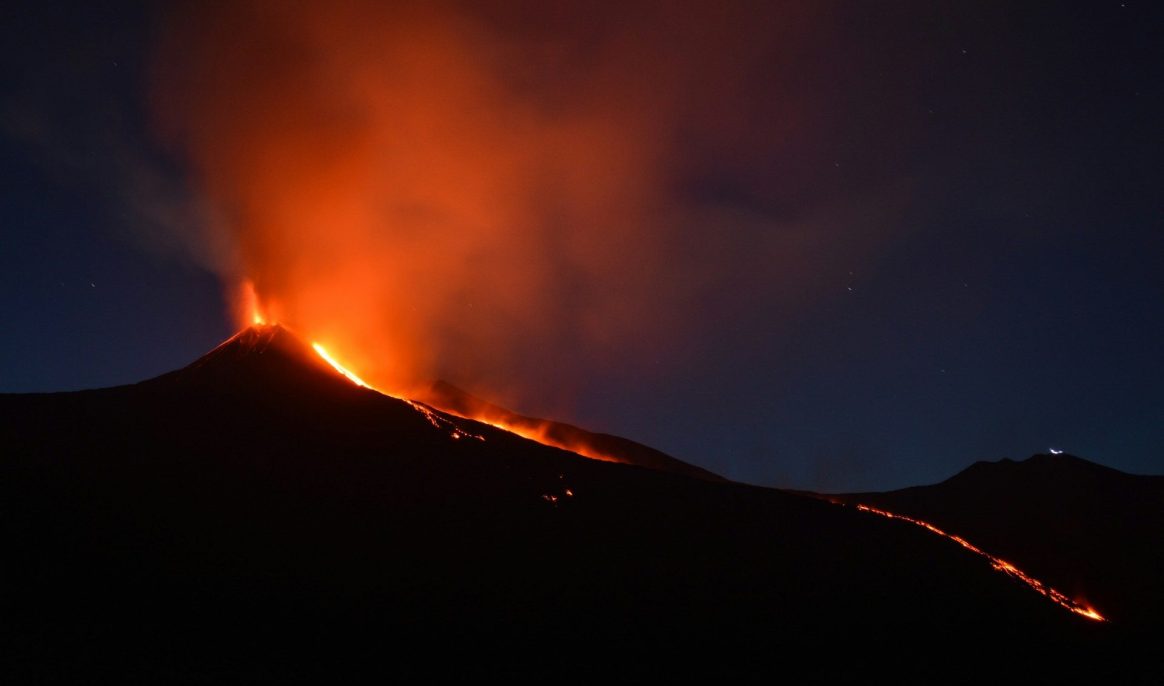
According to the Italian National Institute of Geophysics and Volcanology (INGV), Mount Etna is producing not only ash but also lava flows down its flanks. Mount Etna is considered the most active volcano in Europe. The airport operator recommends that travelers not travel to Catania without first checking the status of their flight directly with their airline.
Particularly dangerous for aircraft
The closure of Catania Airport follows the activation of the highest alert level for air traffic. The Italian National Institute of Geophysics and Volcanology (INGV) reported that the eruption is occurring from fissures located at altitudes of approximately 2,360 and 2,750 meters, from which both lava and large quantities of ash are flowing. According to the Volcanic Ash Advisory Center in Toulouse, the ash cloud has moved south and southwest, reaching as far as Malta and even heading toward North Africa.
Volcanic ash is particularly dangerous for airlines. These fine particles can damage aircraft engines, reduce visibility, and disrupt the operation of sensors and other essential systems. That is why not only the airport itself but also the airspace in the direction of the ash cloud have been closed. Catania Airport is asking passengers not to go to the airport without first checking the status of their flight with their airline.
Share: