©Unsplash
-
Aug 07, 2026 10:00
There is a story from New Zealand that challenges a belief we thought was set in stone once and for all: a species can be brought back from the brink of extinction.
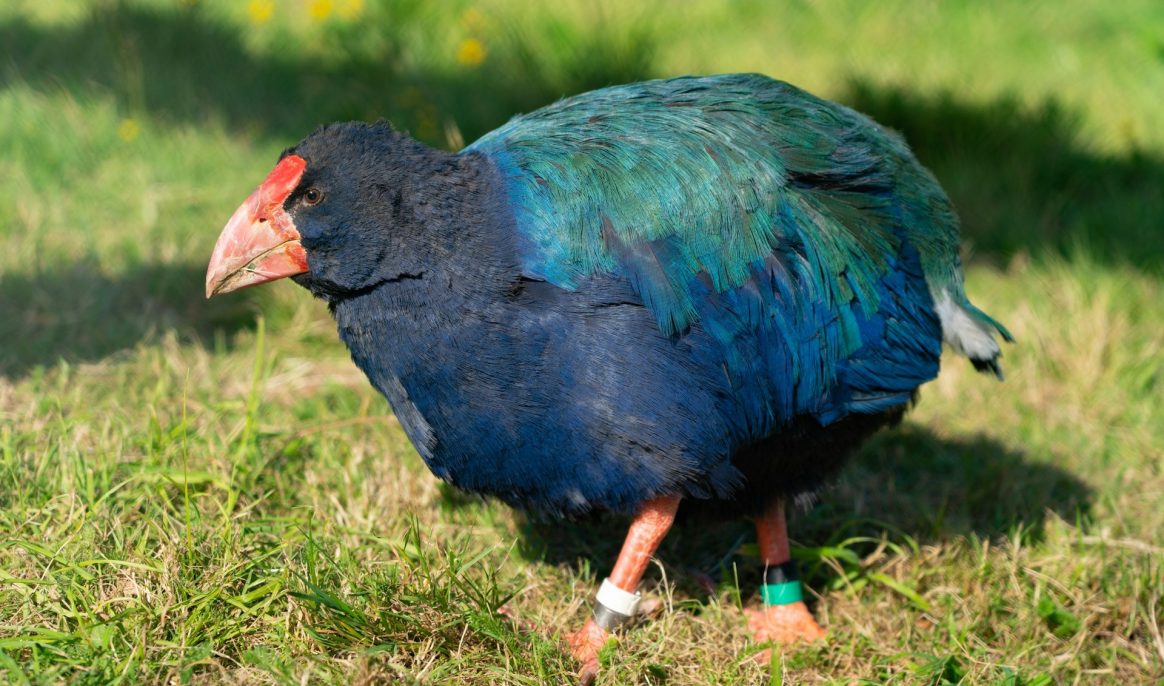
Its protagonist is the Takahē, a large flightless bird with vivid blue plumage and an almost prehistoric appearance, which for decades was considered lost forever. And yet, that wasn’t the case: it had remained hidden, silent, waiting for someone to give it back its space and time.
The Takahē is a bird endemic to New Zealand, belonging to the rail family, of which it is the largest living member. It cannot fly, has sturdy legs, a massive, bright-red beak, and plumage ranging from deep blue to green—so much so that it seems straight out of another era.
After the arrival of European settlers in the 19th century, its population plummeted rapidly. Habitat destruction, hunting, and especially the introduction of predators such as cats, rats, and stoats led to such a drastic decline in the takahae population that, for more than fifty years, not a single individual was sighted. To the scientific community, it was an extinct species, a name relegated to the pages of books.
Then, in 1948, the unthinkable happened: an expedition led by explorer Geoffrey Orbell spotted a few living Takahēs in a remote mountainous area of Fiordland. This rediscovery made headlines around the world and marked the beginning of one of the longest and most complex conservation efforts ever undertaken.
Saving the takahae was neither simple nor quick. On the contrary, it was a decades-long effort, marked by small steps, mistakes, corrections, and a great deal of determination. New Zealand authorities launched a restoration program based on controlled breeding, genetic management, health monitoring, and, above all, the control of introduced predators, which remain the primary threat to this species to this day.
Some individuals were raised in protected environments, while others were transferred to islands and fenced-off areas where predators are absent. Over time, the takahae population began to grow slowly, eventually surpassing a threshold that had once seemed unattainable.
Today, there are more than 500 individuals, with an increasingly large proportion once again living in the wild. Some have been reintroduced into areas where the Takahē had not been seen for over a century—a clear sign that the species is reclaiming part of its original range.
The takahae is not just a fascinating animal or a biological curiosity. It is living proof that conservation works when it is carried out over the long term and is based on scientific knowledge and human responsibility. Its story shows that nature is not as fragile as is often thought, but neither is it invincible: it needs favorable conditions to be able to regenerate.
Every new birth, every pair that breeds in the wild, every successful reintroduction tells the same story: extinction is not always a point of no return. Provided, however, that humans stop being the problem and become part of the solution.
Share: