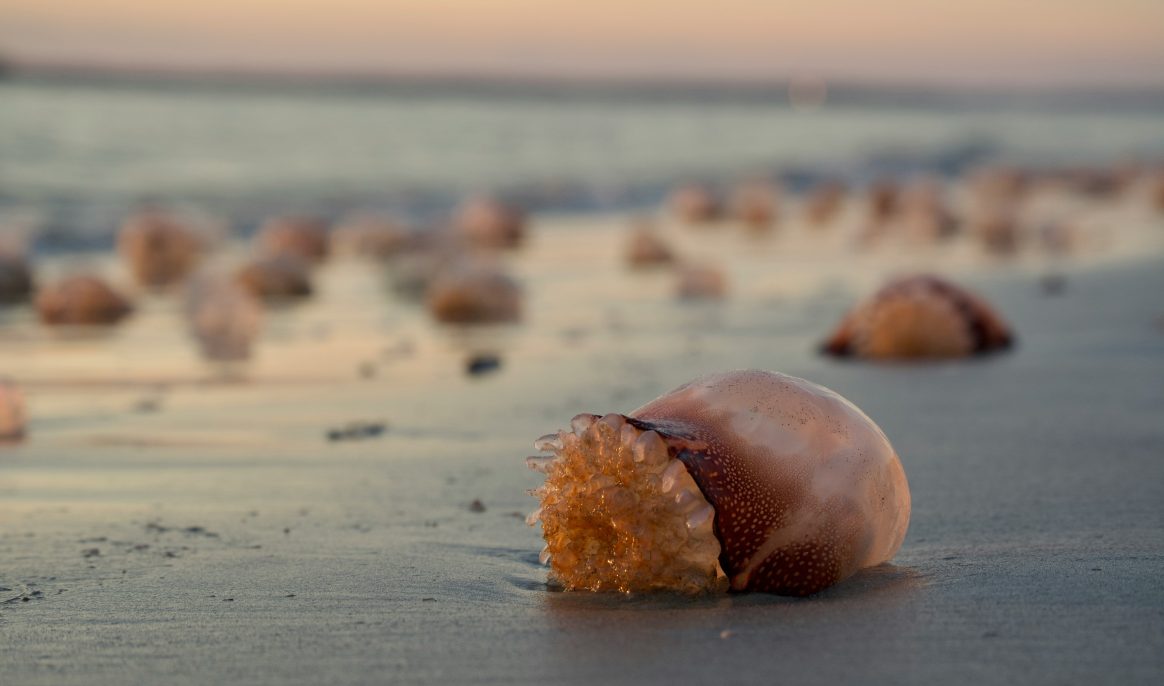
©Ryan Reed via Unsplash - photo d'illustration
-
Jul 31, 2026 14:11
Is there an ever-increasing presence of jellyfish along the French coastline? This impression mainly reflects the intense disturbances our oceans are undergoing.
While accurately assessing jellyfish populations remains challenging—particularly due to natural fluctuations linked to weather conditions, winds, and currents—certain areas, such as the Mediterranean, are experiencing more frequent massive concentrations within just a few days. Scientists refer to this phenomenon as “jellyfish blooms.”
As water temperatures rise, jellyfish reproduction and growth are directly stimulated. Warmer water also helps polyps survive the winter. But climate change isn’t the only factor. Other human-induced factors must be taken into account: overfishing is eliminating their predators and competitors for plankton, while port infrastructure creates new surfaces for polyps to attach to.
A study conducted on the pelagic jellyfish (Pelagia noctiluca) in the Mediterranean—the primary cause of summer stings—shows that its abundance results primarily from a combination of thermal factors, food availability, and ocean currents.
Far from being mere invaders that appeared suddenly, these opportunistic animals—which take advantage of climate change, coastal development, and fishing—have become true bioindicators of the overall health of our seas.
Share: