©Unsplash
-
Jul 17, 2026 13:00
An experiment with a bonobo suggests that animals also inhabit the world of the invisible.
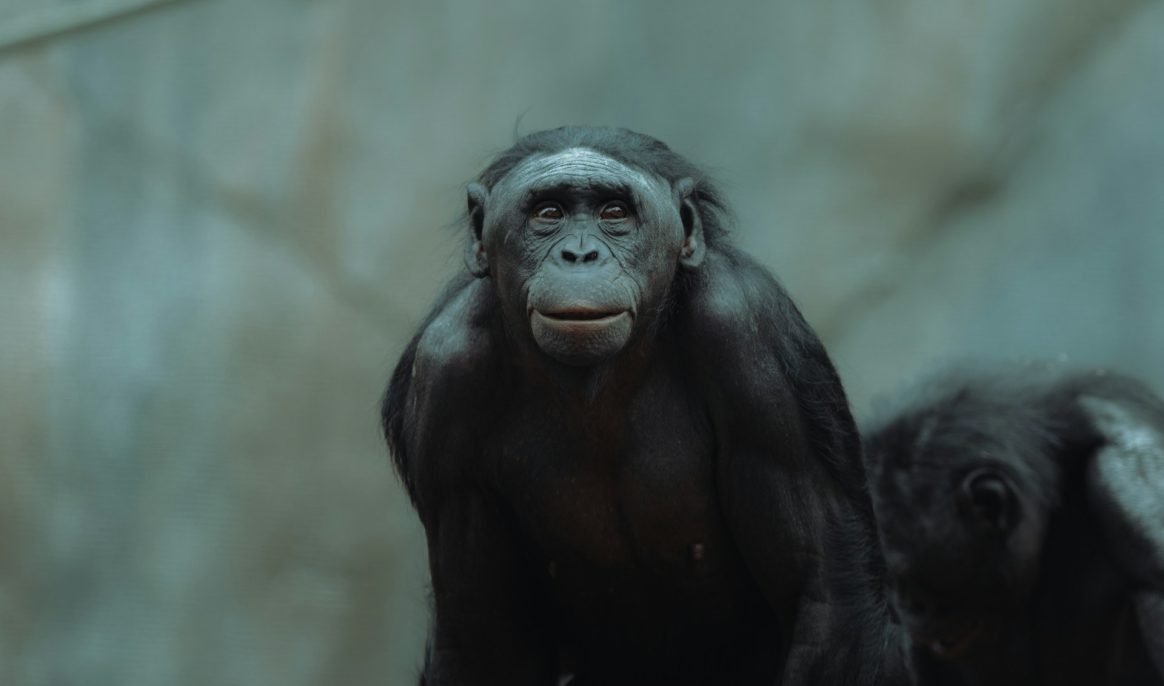
The study, published in the journal Science by researchers at Johns Hopkins University, focuses on Kanzi, a 43-year-old bonobo living at the Ape Initiative who is no ordinary specimen: for years, he has been known for his ability to understand verbal cues and communicate by pointing at objects.
The symbolic play experiment
The researchers chose a simple, almost domestic setting—a scene reminiscent of children’s classic “pretend tea party”: empty cups, a clear pitcher, and no real drink. The experimenter pretends to pour juice into two cups. He then simulates emptying one of them by shaking it to“show” that it no longer contains anything. He then asks Kanzi a direct question: “Where is the juice? ” In most cases, Kanzi points to the cup that, in the imaginary game, should still contain the invisible drink. This is not an isolated gesture. Even when the cups are moved around on the table, the bonobo continues to follow the logic of the made-up scenario.
Another experiment yielded the same results.
Why Kanzi changes how we view other animals
Christopher Krupenye, one of the study’s authors, spoke of a finding that forces us to rethink the mental lives of animals. If a bonobo is capable of conceiving of something that is not physically present and, at the same time, of knowing that it is not real, then its mind is not anchored solely in the immediate moment.
Share: