
©Kevin Wang via Unsplash
-
Jul 25, 2026 07:13
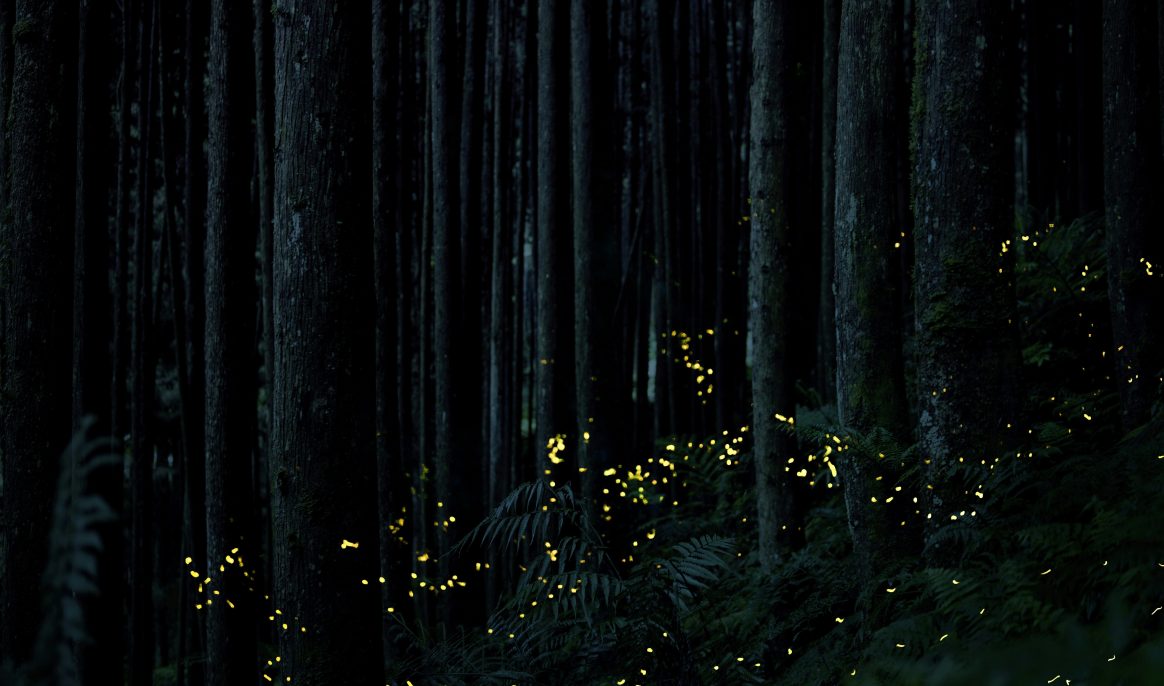
Belonging to the order of beetles, fireflies are known to inhabit temperate and tropical regions. Once night falls, the light they emit allows them to enter a “mating” phase.
These insects use what is known as “bioluminescence”—a steady or flashing light ranging from yellow to red or green—to communicate and attract mates.
In the blue phantom firefly (Phausis reticulata), found in the central and eastern United States, the glow appears blue-white from a distance but is actually greenish. Unlike the winged, flying males, the females of this specific species remain in the larval stage, developing only rudimentary compound eyes (to ensure better vision once they reach adulthood).
Visible, yes, but not necessarily vulnerable
In all species, after the eggs hatch on the ground in temperate regions, firefly larvae (sometimes called “glowworms,” a name shared with the family Phengodidae) hibernate under leaves before resurfacing in the spring.
As carnivores, they primarily prey on slugs and snails, while some adult insects feed on nectar and pollen. And be warned: their visibility doesn’t make them fragile—chemical compounds with a repellent taste effectively deter predators such as birds and amphibians.
Finally, not all fireflies glow. While this ability is most characteristic of nocturnal or forest-dwelling species, those that are diurnal prefer to communicate and attract mates using pheromones.
Share: