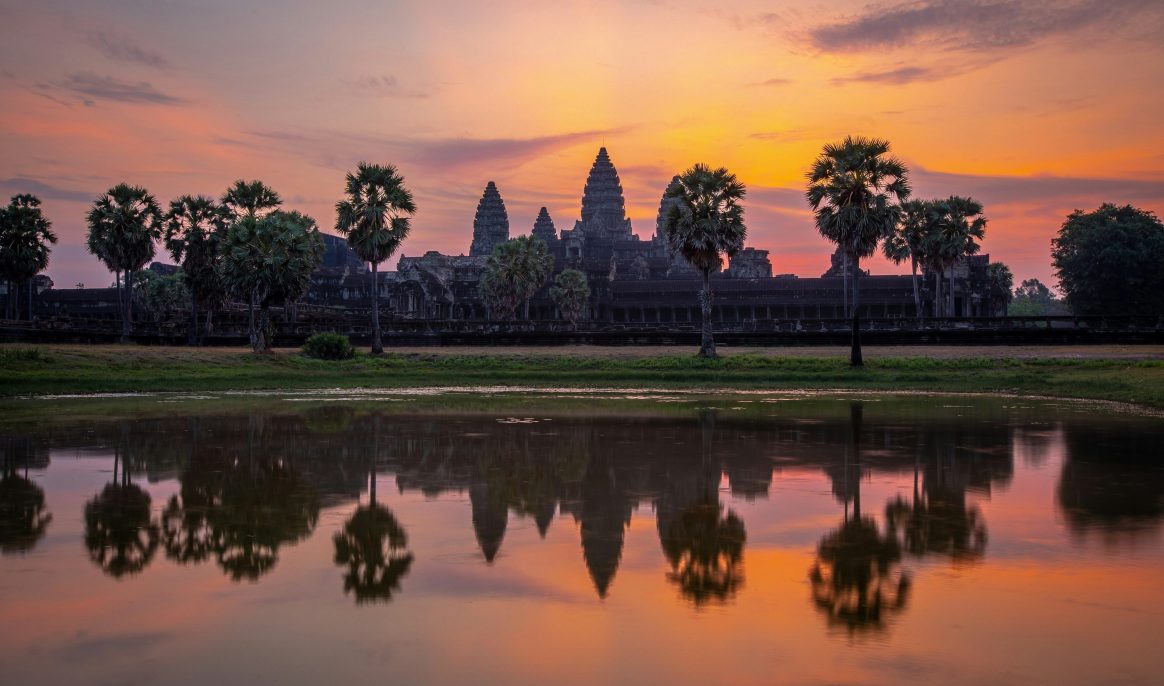
© Sebastian Latorre via Unsplash
-
Jul 22, 2026 09:00
Deep within the forest of Siem Reap, Cambodia, every year, the ancient city of Angkor and its magnificent temples attract nearly one million foreign visitors to one of the world’s largest archaeological parks, a UNESCO World Heritage Site. The capital of the Khmer Empire, long considered the largest city on the planet at its peak, this city—which once exerted its influence across the entire Southeast Asian peninsula—now bears the scars of systematic looting orchestrated by a British antiquities dealer posing as a patron of the arts: Douglas Latchford, alias “Dynamite Doug.”
Angkor spans approximately 400km² of temples, basins, embankments, and canals in northern Cambodia, near the city of Siem Reap, on the shores of Tonlé Sap Lake, the largest freshwater body in Southeast Asia. From the 9th to the 15th century, the Khmer Empire ruled over a territory that covered much of present-day Cambodia, Thailand, Laos, and Vietnam from this capital. At its peak in the 12th century, Angkor is said to have been home to as many as 700,000 people, making this religious and administrative center one of the largest cities in the world. At the time, Paris and Ghent had populations of around 25,000...
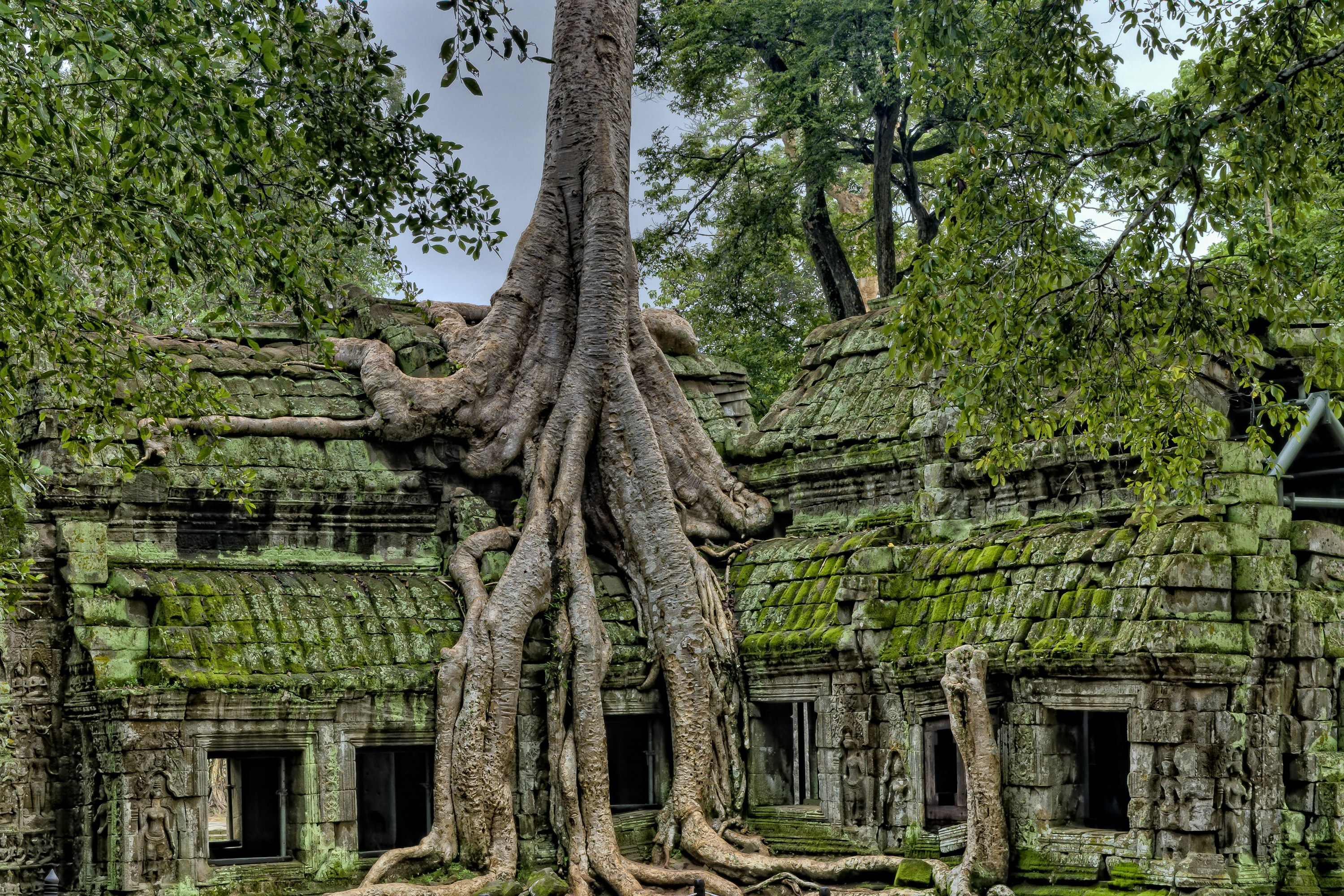
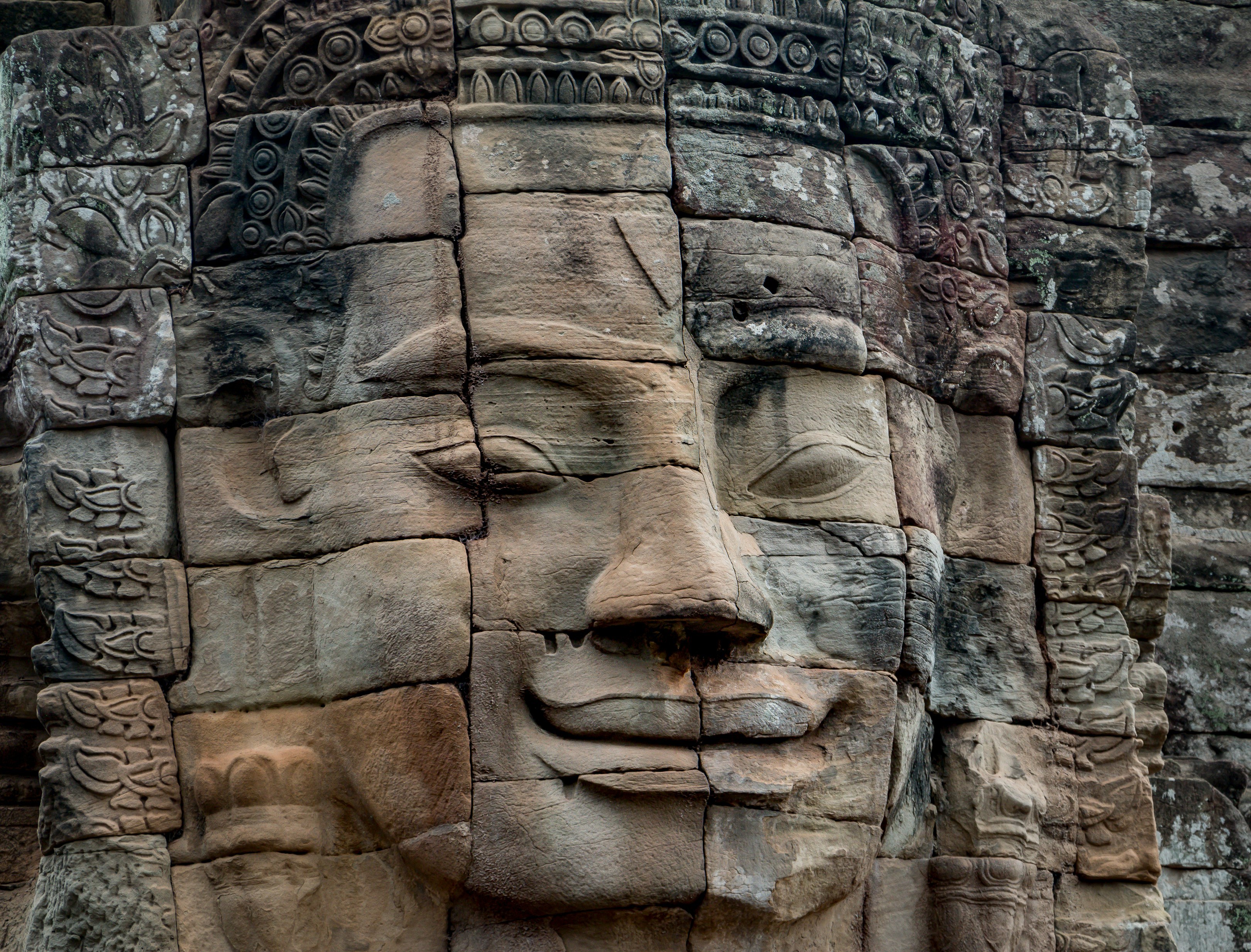
Listed as a UNESCO World Heritage Site since 1992, the Angkor Archaeological Park is now Cambodia’s premier tourist destination. It welcomes nearly one million foreign visitors every year, all coming to admire Angkor Wat—the site’s largest temple and the world’s largest religious monument, regularly ranked among the world’s top 25 tourist attractions. But other sites in the park are equally breathtaking: the face towers of Bayon, the Terrace of the Elephants, the Ta Prohm temple with its giant roots entwined around the stone, as well as the pink sandstone Banteay Srei temple (which was looted by Malraux— we’ll come back to that) and Preah Khan—a week isn’t enough to explore all the ruins that tell the story of six centuries of Khmer civilization.
A stroll through a Ghost town
At dawn, the traveler leaves the city of Siem Reap and follows the long stone causeway leading to the lotus-shaped towers of Angkor Wat. In the pink light, the silhouettes of the temples stand out against the water reservoirs, remnants of a sophisticated hydraulic engineering system that long irrigated the empire’s rice fields. All around, the forest covers the ancient royal roads, dikes, and reservoirs, as if the jungle were trying to close in on a city that had been exposed for far too long.
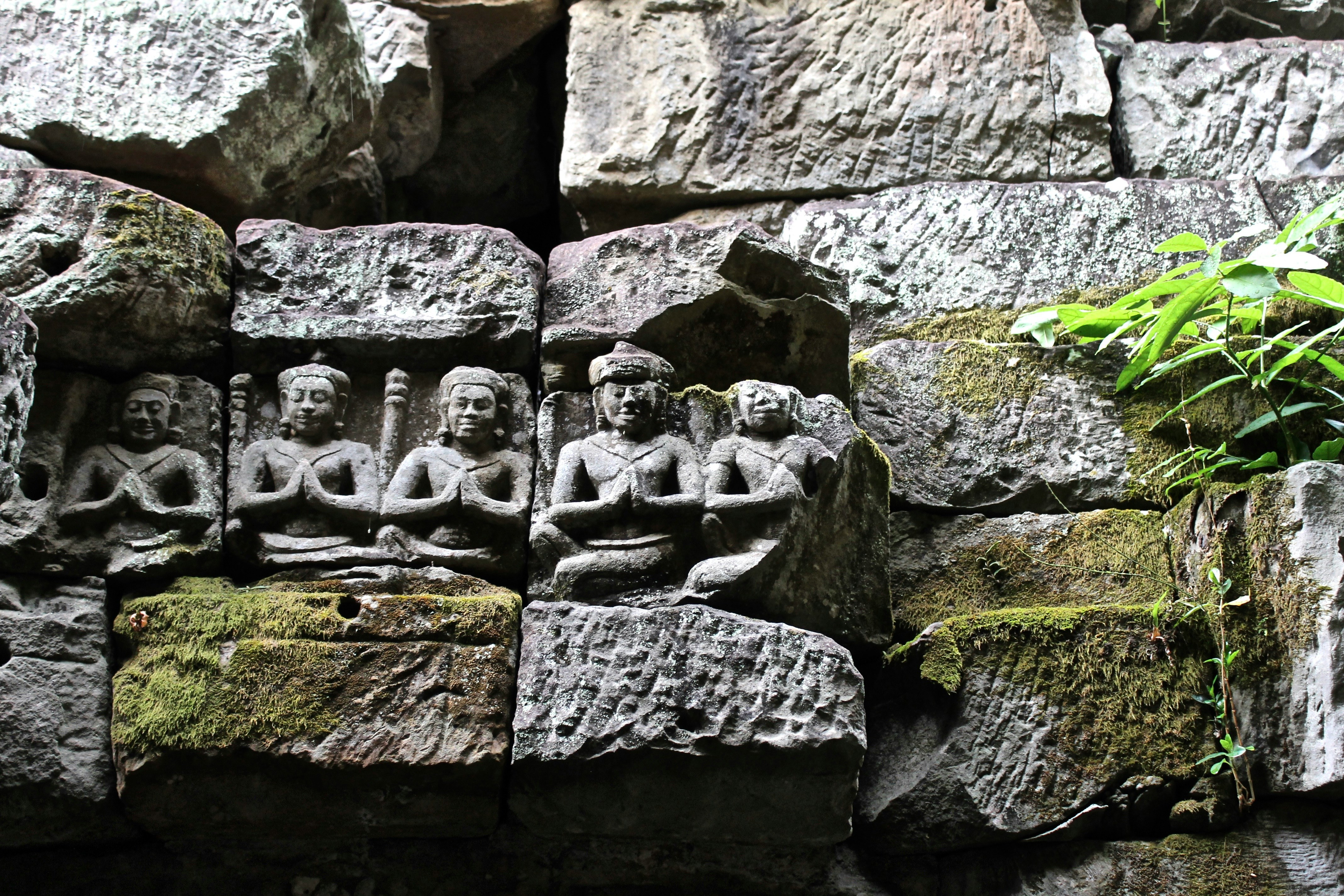
But upon entering the carved galleries, the eye stumbles upon voids. Here, a pedestal without a statue; there, a gaping niche; further on, an unbalanced bas-relief; and still further, a decapitated statue: so many “gaps” that tell of another journey—that of the Khmer stones toward the hushed halls of Western museums and the salons of private collectors. Angkor is no longer understood solely through what remains, but through what has been torn from it.
Dynamite Doug, the shadow of the looter
For decades, Douglas Latchford presented himself as a passionate collector of Khmer art and was a respected figure in the Asian art market, according to a lengthy article on the Cambodge Mag website. As early as the 1960s, he traveled throughout Cambodia, photographing temples, organizing expeditions, and portraying himself as an explorer saving sculptures threatened by war and the jungle. Behind this narrative lies a far darker reality: statues cut with saws, severed heads of deities, lintels hoisted with crowbars and transported at night by networks of traffickers to ports and airports. All of this took place during a period we would prefer to forget, with the complicity of the Khmer Rouge.
In catalogs of major auction houses and display cases of prestigious museums, Latchford became the ultimate authority, the purported moral guarantor of the provenance of Khmer works. His offshore structures, revealed by the Pandora Papers, lend an air of administrative respectability to an antiquities trafficking operation whose value rivals that of the drug trade. For nearly sixty years, the looter operated in the shadows, while Angkor was stripped of some of its treasures.
A scarred landscape, tourism under scrutiny
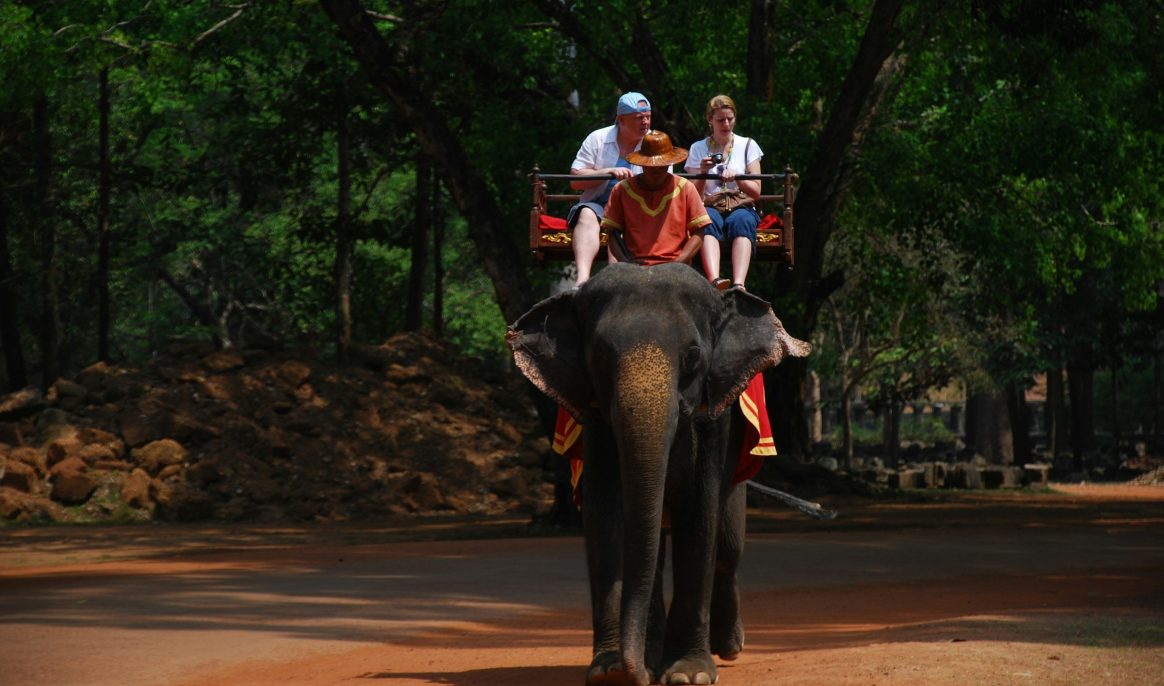
For travelers, the consequences become apparent with every step: the temples of Angkor, which in just a few decades have become a flagship destination for Asian tourism, must contend with the influx of visitors, pollution, and the scars left by the theft of artifacts. Amid air-conditioned tour buses, wooden walkways, and dried-up pools, the question arises: how can one visit without contributing to a new form of degradation?
Indicted in 2019 by U.S. authorities for antiquities trafficking, Douglas Latchford died in 2020 before his trial. Since then, a restitution movement has gained momentum: artifacts returned to Cambodia, collections re-examined, and a growing awareness within cultural institutions. For the nature-loving traveler, understanding the story of “Dynamite Doug” means learning to see Angkor in a new light: as a wounded landscape, whose beauty imposes a shared responsibility—to respect the sites, to reject dubious “souvenirs,” and to support, through our choices, the protection of the soul of the Khmer kingdom.
Malraux, a French precedent in the 1950s
The André Malraux affair remains, in the collective imagination, the first major scandal involving organized looting at Angkor. In December 1923, the 22-year-old writer, ruined by bad investments, set out with his wife Clara and a friend on an expedition to the temple of Banteay Srei—then little known and poorly guarded—located about 45km from the main sites. Armed with stone chisels and saws, they cut out nearly a metric ton of pink sandstone: bas-reliefs, fragments of Apsaras (the sacred dancers), and decorative elements that they hoped to resell to European antique dealers. Intercepted in Phnom Penh thanks to a tip from a Khmer guide and the intervention of Georges Groslier, the museum’s curator and a member of the École française d’Extrême-Orient, Malraux and his accomplices were convicted of antiquities theft. The sentence—three years in prison, reduced to a one-year suspended sentence—quickly became a topic of debate in Parisian intellectual circles. The sculptures were returned and incorporated, as early as 1924, into the temple’s restoration led by archaeologist Henri Marchal. Yet, far from marking the end of the phenomenon, the “Malraux Affair” ushered in almost a century of trafficking on an even larger scale.
After World War II, and especially during the civil war and the Khmer Rouge regime, Khmer temples were left to fend for themselves. Networks of local looters, sometimes backed by the military, pried statues, lintels, and friezes from their settings using pickaxes, chisels, and even dynamite. The artifacts were smuggled across the Thai border, where they were purchased by antique dealers before being laundered on the international market. In the 1990s and 2000s, thousands of Khmer artworks thus appeared in private collections and museums in Europe, the United States, and Asia. The Douglas Latchford case epitomizes this system: for nearly sixty years, the British antiquities dealer organized, through expeditions to the sites and networks of smugglers, the massive transfer of sculptures to the West, falsifying provenance and documentation.
Fortunately, since Latchford’s conviction, a wave of repatriations has gained momentum: in 2021, some thirty works were returned by the United States to Cambodia; in 2026, an additional 74 pieces were returned from the United Kingdom as part of an agreement with Latchford’s family. These scandals serve as a reminder that the trafficking of Khmer antiquities was one of the largest in the world, to the point of being compared, in financial terms, to the drug trade.
Main photo: Angkor Wat at dawn - © Sebastian Latorre via Unsplash
Share: