©Leo_Visions via Unsplash
-
Jul 26, 2026 11:54
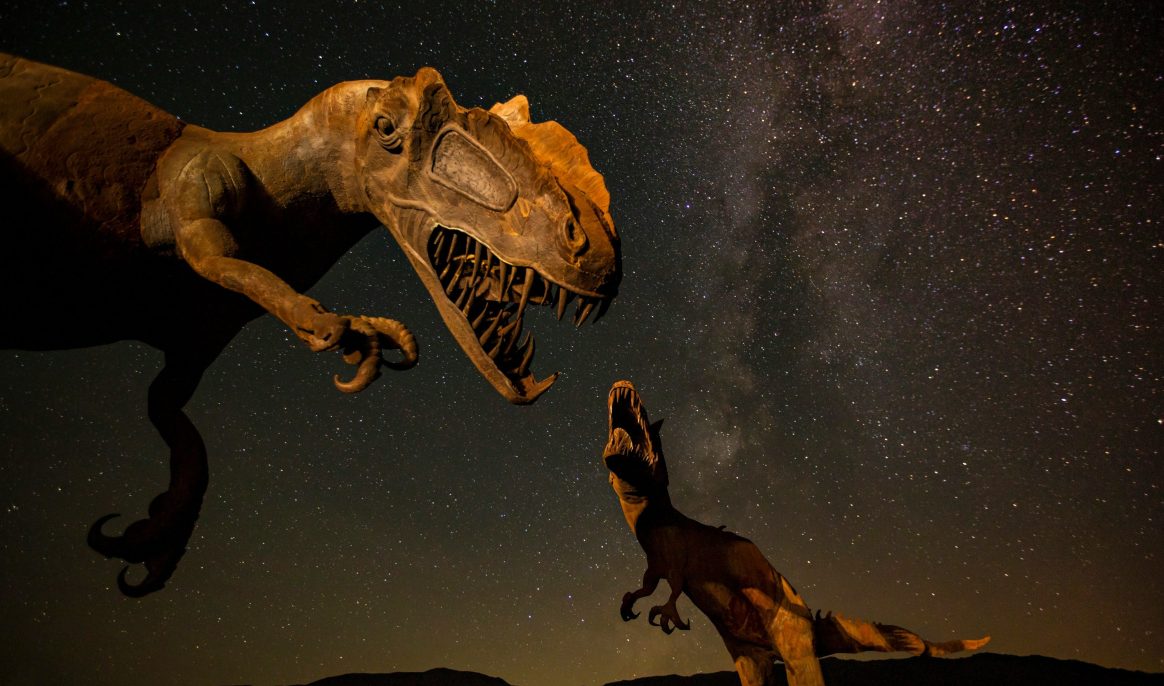
This happened more than 66 million years ago. The impact of a mysterious meteorite 10 to 15 kilometers wide, traveling at 64,000 km/h, formed the Chicxulub crater in Mexico, causing the extinction of 75% of the species on Earth, including the dinosaurs.
According to a study conducted by researchers at the University of British Columbia (Vancouver), as reported by The Debrief, isotopic analyses of nickel trapped in clays from that era reveal that the meteorite belonged to a very rare category: Ornans-type carbonaceous chondrites (CO).
Philippe Claeys, a professor of geology at Vrije Universiteit Brussel (Belgium) and co-author of the study, explains that these rocks are radically different from the typical meteorites we’re used to seeing in museums and that they contain far fewer volatile elements (zinc, sulfur, carbon, or water).
This chemical signature challenges the conventional scenario for the extinction of the dinosaurs. Sulfur, in particular—a volatile element—is considered one of the key factors in the major cooling that followed the impact. However, a CO chondrite contains half as much sulfur as other types of asteroids. This observation is prompting researchers to reassess the exact role of terrestrial rocks pulverized during the impact.
Origin still uncertain
Based on these data, the scientists explain:“By combining our new nickel isotope data with existing evidence, we demonstrate that the composition of the Chicxulub impactor was most likely of the CO chondrite type,” a conclusion made possible “given the high abundance of nickel in primitive meteorites compared to the Earth’s crust and the distinct isotopic compositions they record.”
Beyond the mechanism of the extinction, these findings suggest that the asteroid originated from the outer reaches of the solar system, or even from the outer edges of the asteroid belt near Jupiter. Although this does not rule out the meteorite’s role in the biological crisis, Philippe Claeys concludes: “The fact that they were struck by such a rare and distant projectile really highlights just how unlucky the dinosaurs were.”
Share: