©Unsplash
-
Jul 22, 2026 16:30
We often talk about the climate crisis, pesticides, intensive agriculture, and habitat loss. We use the word “biodiversity” almost every day, as if it were a familiar concept, and yet one basic question remains surprisingly unanswered: How many species of bees actually exist in the world?
This isn’t just a matter of curiosity for entomologists. It’s an issue that affects our food supply, the stability of ecosystems, and, ultimately, the quality of life for each and every one of us. For the first time, a study published in Nature Communications attempts to answer this question using robust statistical methods. The resulting figure is higher than previously imagined: the planet may be home to between 24,705 and 26,164 species of bees. And it’s possible that we may never be able to identify them all.
Bees and Biodiversity: Why Their Numbers Matter More Than We Think
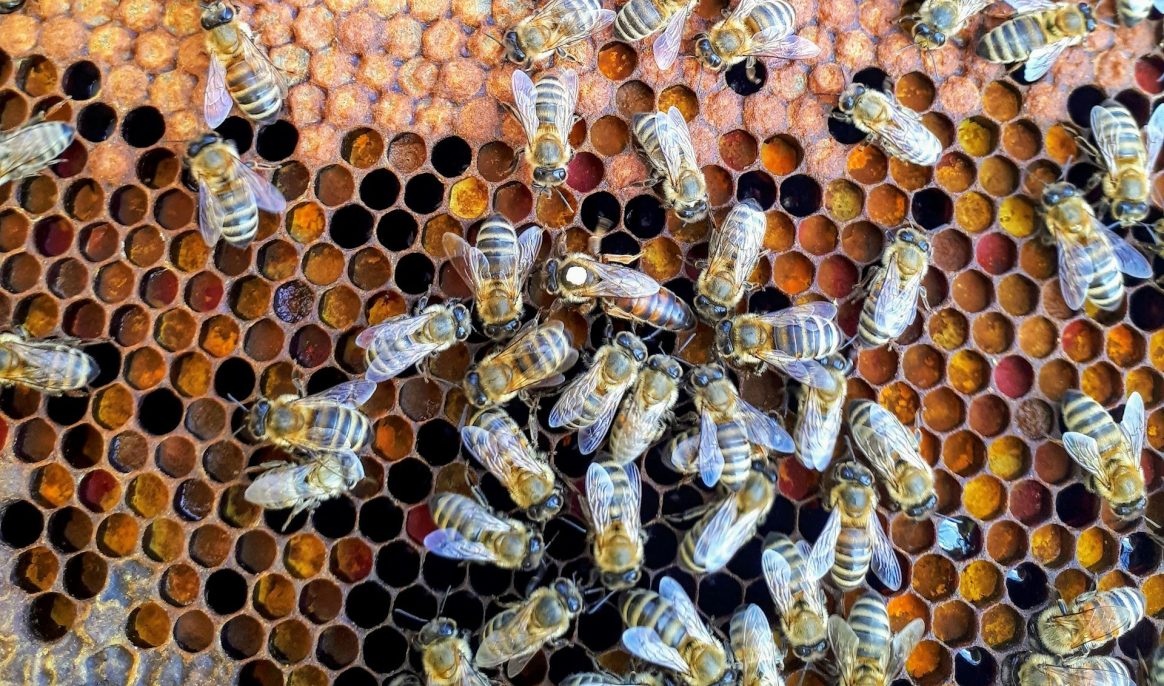
When we think of bees, our minds immediately turn to honeybees or the bumblebees we see in meadows in the spring. In reality, we’re talking about a vast and still largely unexplored world.
Bees are the world’s most important group of animal pollinators. Without their silent work, a significant portion of our food system would collapse. Globally, the economic value of pollination for agricultural crops—adjusted for inflation—is estimated at approximately 745 billion Australian dollars per year. But reducing all of this to a mere economic figure would be an oversimplification.
Nearly 75% of the diversity of food crops and 35% of total food production benefit from animal pollination. More than 90% of flowering plants—approximately 307,000 species—depend on animals for reproduction. Plants produce oxygen, absorb carbon dioxide, regulate temperature, protect soils from erosion, and form the basis of food chains.
Bees are a“keystone” group in ecosystems: their disappearance would trigger a cascade of effects that would be difficult to contain. Understanding how many species exist helps us better grasp the resilience and fragility of the natural systems that sustain us.
From historical estimates to new statistical analyses
In 2007, the American entomologist Charles Michener, in his book Bees of the World, estimated the number of known species at over 18,000 and the total number of species at over 20,000. Today, we have surpassed 21,000 formally described species, but these were still merely estimates not supported by a comprehensive statistical model.
The novelty of the study published in Nature Communications lies precisely in this approach. The researchers used more than 8.3 million records of bee sightings worldwide, as well as national lists and a global taxonomic database covering some 21,000 already named species. Using statistical models, they estimatedthe “lower bound” of the actual number of existing species.
The principle is intuitive when applied on a local scale. If, in a given area, the same abundant species are consistently found, it is likely that the sampling is nearly complete. Conversely, if numerous rare species—observed only a few times—appear, this suggests that the actual biodiversity could be greater than what has been recorded so far. Applying this reasoning on a global scale yields a more robust and conservative estimate.
The result shows an increase of between 18% and 25% compared to previous estimates. In absolute terms, this means there could be as many as 26,164 species of bees on the planet.
At the current rate of description—approximately 117 new species per year—it would take between 32 and 45 years to catalog them all. And this projection is conservative, as the easiest-to-identify species have already been described, while those yet to be discovered may be more elusive, concentrated in remote areas, or distinguishable only through advanced genetic techniques.
New discoveries will likely be concentrated in Asia and Africa, where research is more complex and available data is still limited. In several African countries, there is even a lack of usable observation sites. Even in economically developed countries such as Australia, the systematic lack of genetic analyses can lead to an underestimation of the actual species richness, particularly for so-called “cryptic” species, which are morphologically very similar to one another.
The scope of this work extends far beyond the world of bees alone. The model developed shows that it is possible to estimate the total number of species within a biological group using existing data and advanced statistical tools. This allows for more precise targeting of conservation policies, the setting of research priorities, and more focused protection of areas where biodiversity remains poorly understood.
A cost-benefit analysis conducted in Australia estimated that every dollar invested in discovering and documenting previously unknown species could generate up to 35 dollars in economic benefits for the country. Investing in biodiversity knowledge is not just an ethical or environmental choice; it is also a sound strategy from an economic and social perspective.
The real issue, perhaps, is one of time: amid the climate crisis and the accelerating destruction of habitats, we could lose species before we even know they exist. Every new species identified is a piece of a vast mosaic that tells the story of life on the planet.
Knowing that there could be as many as 26,000 species of bees paints a picture of nature that is both richer and more fragile. And it is precisely this awareness that can give rise to a more concrete commitment to protect pollinators, reduce pesticide use, preserve natural habitats, and rethink our agricultural model.
Share: